
Disclosure: This post contains affiliate links. If you buy through them, BloomBabe may earn a small commission at no extra cost to you. As an Amazon Associate, I earn from qualifying purchases. We only recommend gear we’d use on our own plants.
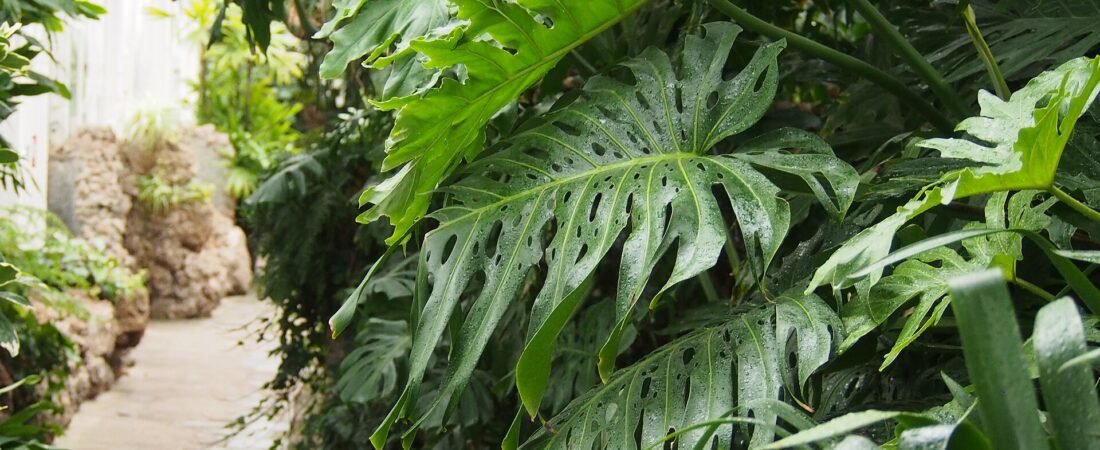
Almost everyone’s first “statement” plant is a Monstera. You see one in a corner of somebody’s living room, leaves the size of dinner plates with those holes cut through them, and you want it immediately.
Then you get it home and the new leaves come out plain. No splits, no holes. Just green paddles.
That’s the part nobody warns you about, and it’s fixable. Monsteras aren’t difficult — they’re just specific about two things (light and root space) and forgiving about almost everything else. Here’s how to grow one that actually looks like the photo.
Meet the Monstera
Monstera deliciosa is a climbing aroid from the rainforests of southern Mexico and Central America. In the wild it doesn’t sit politely in a pot — it scrambles up tree trunks, gripping bark with thick aerial roots, climbing toward the light. That climbing habit matters more than anything else you’ll read about this plant, and we’ll come back to it.
The holes have a name: fenestrations. The leading theory is that they let wind and dappled light pass through a huge leaf without shredding it, so the plant can build enormous surface area cheaply. Young plants don’t make them. Splits show up as the plant matures and gets enough light, usually somewhere around the third or fourth leaf on a well-grown plant — but sometimes much later on one that’s struggling.
A few worth knowing:
- Monstera deliciosa — the classic. Gets genuinely large, 6–8 feet indoors with room to climb.
- Monstera adansonii — the “Swiss cheese vine.” Smaller leaves, more holes, trails or climbs. A great starter aroid.
- Monstera Thai Constellation — creamy variegation splashed across the leaf. Slower, pricier, and it wants noticeably more light.
- Mini Monstera (Rhaphidophora tetrasperma) — not a Monstera at all, despite the label. Grows fast, splits early, worth having anyway.
Light
This is where the splits come from. A Monstera in dim light will survive for years and never fenestrate — it simply doesn’t have the energy to build a leaf that big.
- Ideal: bright, indirect light. A few feet back from a south or west window, or right up in an east window.
- Good: filtered light through a sheer curtain. Gentle morning sun is a bonus, not a risk.
- Avoid: hours of harsh midday sun on bare leaves, which scorches pale patches into them.
- Tolerates: medium light. It’ll live. It just stays juvenile.
If your brightest window still isn’t much, a full-spectrum LED grow light on a timer changes this plant more than any other adjustment. Rotate the pot a quarter turn every week or two, or you’ll end up with a plant that leans hard toward the glass.
Water
Monsteras want to dry out partway, not completely, and not never.
- Water when the top 2–3 inches of soil are dry. Push a finger in — the surface lies.
- Water thoroughly until it runs out the drainage hole, then dump the saucer. Don’t let the pot sit in a puddle.
- In practice: roughly weekly in spring and summer, every 10–14 days in winter. Treat those as starting guesses, not a schedule.
Signs to read: drooping leaves that perk up after a drink mean thirsty. Yellowing lower leaves, especially with soggy soil, mean the opposite — and overwatering kills far more Monsteras than underwatering does. If you’re the type to water on autopilot, a soil moisture meter is cheap insurance.
Soil
Standard potting soil straight from the bag holds too much water for an aroid. These roots evolved clinging to tree bark — they want air.
Mix your own, or start with a bagged aroid potting mix. A blend that works well:
- 3 parts indoor potting soil
- 2 parts orchid bark
- 1 part perlite
- a handful of horticultural charcoal if you have it
It should feel chunky and loose in your hand. Water should run through it, not sit on top. And whatever you pot into needs a drainage hole — no exceptions, no gravel layer at the bottom instead.
Fertilizer
Monsteras grow fast when they’re happy, and fast growth eats nutrients.
Feed with a balanced liquid houseplant fertilizer every 2–4 weeks through spring and summer, diluted to about half the strength on the label. Taper off in fall and skip winter entirely unless your plant is under grow lights and still actively pushing new leaves.
Crusty white buildup on the soil surface is fertilizer salt. Flush the pot under running water for a minute or two every few months to clear it.
Temperature and Humidity
Comfortable room conditions are fine: 65–85°F. Below 55°F it sulks, and cold drafts from a front door or a leaky window in January will spot the leaves. Keep it away from heating vents too — the dry blast is worse than the temperature.
Humidity around 50–60% is the sweet spot, but a Monstera will do fine in normal household air. If yours sits next to a radiator all winter and the leaf edges go crispy, a small cool mist humidifier nearby helps more than misting does. Misting raises humidity for about ten minutes and mostly makes us feel useful.
Repotting — and the support pole
Repot every 1–2 years, in spring if you can, or whenever roots are pushing out the drainage holes and water runs straight through. Go up one pot size only. A Monstera swimming in a huge pot of wet soil is a root rot waiting to happen.
Here’s the part that gets skipped. Give it something to climb. A moss pole or coir pole, sunk into the pot and tied loosely to the stem with soft plant ties, tells the plant it’s climbing — and a climbing Monstera makes bigger, more deeply split leaves than one sprawling sideways across your floor. Keep the pole damp and the aerial roots will grab it on their own.
Don’t cut the aerial roots off, by the way. You can tuck them into the pole or the soil, but they’re the plant’s anchors, not a defect.
Propagation
Monsteras root easily, and it’s genuinely satisfying.
- Find a node — the slightly swollen bump on the stem where a leaf and often an aerial root emerge. This is non-negotiable. A leaf with no node will sit in water looking pretty for months and never root.
- Cut about an inch below the node with clean pruning shears. Take a cutting with one or two leaves attached.
- Root it in a jar of water on a bright windowsill, changing the water weekly. Roots usually show in 2–4 weeks.
- Pot it up once the roots are 2–3 inches long, into the same chunky mix. Keep it a bit more evenly moist for the first few weeks while it adjusts.
You can also root straight into damp sphagnum moss or perlite, which skips the water-to-soil transition shock some cuttings sulk about.
Common Problems
- New leaves have no splits. Nearly always light, sometimes maturity. Move it brighter, give it a pole, be patient through a few leaf cycles.
- Yellowing lower leaves. Usually overwatering. Check whether the soil is staying wet for days, and confirm the pot actually drains.
- Brown crispy edges and tips. Dry air, inconsistent watering, or fertilizer salt buildup.
- Brown spots with yellow halos. Often root rot working its way up. Unpot it, trim any mushy black roots, repot in fresh mix, and water less.
- Weak, leggy, small new leaves. Not enough light, or it’s been in the same tired soil for years.
- Fine webbing under leaves. Spider mites, usually in dry winter air. Shower the plant off, then treat with neem oil and repeat weekly until they’re gone. Wipe the leaves with a damp cloth now and then — clean leaves photosynthesize better and pests hide less.
Frequently Asked Questions
Is Monstera toxic to pets? Yes. All parts contain insoluble calcium oxalate crystals, which cause mouth pain, drooling, and vomiting if a cat or dog chews on them. Rarely dangerous, genuinely miserable — put it somewhere out of reach.
When will mine get holes? Once it’s mature enough and getting enough light. On a healthy, well-lit plant, expect the first modest splits somewhere around the third or fourth leaf, with bigger fenestrations as it climbs. In a dim corner, possibly never.
Can I cut off the aerial roots? You can, and the plant survives it, but there’s no reason to. Guide them into the moss pole or tuck them back into the soil instead.
Why is my Monstera crying? Those water droplets on the leaf tips are guttation — normal, and usually a sign the soil is on the wet side. Ease off the watering can slightly.
How big will it get indoors? With a pole and good light, 6–8 feet tall with leaves over a foot across. Prune the top back if that’s more plant than you bargained for, and root the piece you cut.
Quick-Start Gear Checklist
- 🪴 Aroid potting mix or potting soil + orchid bark + perlite
- 🧗 Moss pole + soft plant ties
- 💧 Soil moisture meter
- 💡 Full-spectrum grow light
- 🌿 Balanced liquid fertilizer
- ✂️ Pruning shears
- 🐛 Neem oil
If you take one thing from this: bright light and something to climb. That’s the whole secret to the leaves everyone stops to look at. Give your Monstera those two things and it’ll spend the next few years turning into the plant you bought it hoping for. Happy growing, from all of us at BloomBabe. 🌱