
Disclosure: This post contains affiliate links. If you buy through them, BloomBabe may earn a small commission at no extra cost to you. As an Amazon Associate, I earn from qualifying purchases. We only recommend gear we’d use on our own plants.
Nobody buys their first plant stand for the plant. You buy it because the Monstera has been sitting on the floor for four months, the leaves keep getting stepped on, and the whole corner looks like a staging area instead of a room.
But here’s the part that surprised us: a stand genuinely changes how a plant grows. Lifting a pot off the floor puts it closer to the middle of the window instead of the dimmest slice at the bottom. It gets air moving under the pot instead of trapping a damp ring of soil against cold tile. And it makes watering something you’ll actually keep up with, because you’re not crouching on the floor every Sunday.
So it’s decor and horticulture. The trouble is that plant stands are one of the most inconsistent categories online — gorgeous photos, wildly different build quality, and load ratings that range from honest to fictional. Here’s how to pick one, and what we’d choose depending on what you’re actually trying to solve.
What to Look For in a Plant Stand
Five things separate a stand you keep for a decade from one that wobbles into the recycling.
Weight capacity — and be honest about your pot. This is where most people get burned. A 10-inch ceramic pot, full of damp soil, with a mature plant in it, lands somewhere around 20–25 pounds. A 14-inch pot with a Bird of Paradise in it can pass 50. Dry potting mix and wet potting mix are not the same weight; soil roughly doubles when saturated. If a listing claims a capacity, weigh your actual pot on a bathroom scale before you trust it, and leave real headroom.
Stability beats height. Tall, narrow, three-legged stands look beautiful and tip over. If you have a cat, a toddler, or a hallway anybody walks fast through, take the wider base every time. Four legs with a low crossbar are dramatically more stable than three splayed legs, even when the spec sheet says they hold the same weight.
A top that fits your pot. Sounds obvious. It isn’t. A lot of mid-century stands have a ring top sized for a nursery pot, not a decorative one, and your 10-inch ceramic planter either won’t drop in or will sit on the ring at a tilt. Measure the widest point of your pot — usually the rim — and check that against the listed top diameter, not the overall footprint.
Water protection. Unfinished wood, water, and a drip tray are a bad combination. Any stand holding a plant you water in place needs either a sealed finish, a metal top, or a saucer wide enough to catch runoff. Bare mango wood and pine will ring and swell.
Material, matched to the room. Powder-coated metal is the most forgiving near a window or a bathroom. Solid wood looks warmer and is heavier, which helps stability. Bamboo is light and inexpensive but is the first thing to wobble under a heavy pot. Skip anything described as engineered wood or particle board for a plant that gets watered — it swells at the seams and never recovers.
Our Picks by Situation
For the classic single statement plant
A mid-century modern plant stand is the default for a reason: angled wooden legs, a ring or platform top, and a silhouette that disappears into almost any room. Best for a Fiddle Leaf Fig, a Rubber Plant, or anything you want read as furniture rather than clutter.
Buy the shortest version that solves your problem. A 12-inch stand under a 4-foot plant looks intentional; a 28-inch stand under the same plant looks precarious and puts the leaves in the ceiling.
For a window you want to fill
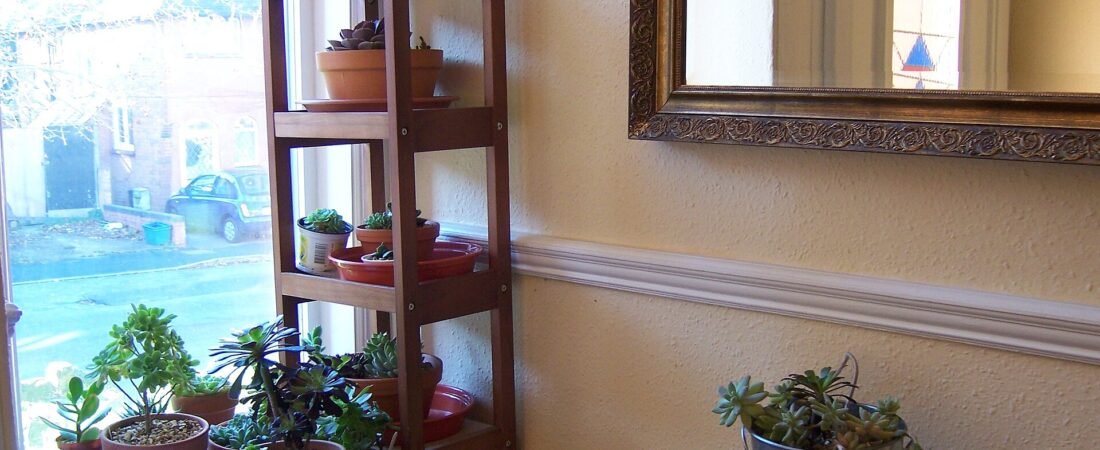
A tiered plant stand turns one square foot of floor into homes for five or six plants, staggered so nothing shades what’s behind it. This is the highest-value pick on the whole list if you’re growing a collection rather than a specimen.
Look for staggered tiers rather than stacked ones — a straight vertical stack means the top plant takes all the light and the bottom shelf is a dead zone. If your window is the whole point, a corner plant shelf does the same job in the awkward angle most rooms waste.
For big, heavy pots
Once you’re past about 30 pounds, look for a metal plant stand with welded joints instead of bolted ones, or a solid-wood stand with a crossbar between the legs. Welds don’t loosen. Bolts do, slowly, every time somebody bumps the pot.
This is also the category where a low, wide stand beats a tall one. A Bird of Paradise or a mature Monstera in a 14-inch pot is top-heavy already; you don’t need to add 24 inches of leverage to it.
For plants you move around
If your plant chases light — or lives somewhere you have to shuffle it for company — get a rolling plant caddy. It’s the least glamorous thing here and probably the one we’d replace first if it disappeared. Being able to roll a 40-pound pot to the sink instead of hauling it is the difference between watering thoroughly and watering carefully-so-nothing-spills.
Get one with locking casters. Unlocked wheels on hardwood mean the plant drifts every time the dog walks past.
For renters and tight floor plans
When there’s no floor to give up, go vertical. A wall mounted plant shelf puts trailing plants at eye level where they read best, and a hanging planter with macrame hanger costs almost nothing and uses a ceiling hook you can patch on move-out.
One caution renters learn the hard way: anything you hang or mount needs a stud or a proper drywall anchor rated well above the wet weight of the pot. A Pothos in a soaked hanging basket is heavier than it looks.
For the plant that isn’t getting enough light
Sometimes the honest answer is that the stand isn’t the problem. If you’re lifting a plant to chase a window that was never bright enough, pair a simple stand with a LED grow light for indoor plants, or use a plant stand with grow light that builds the fixture into the shelf. Elevation gets you a little more light. A grow light gets you the rest.
How to Set It Up So It Lasts
Protect the floor first. Felt pads under the feet, before the plant goes on. Metal legs mark hardwood and scratch tile, and you won’t notice until you move the stand a year later.
Never water a plant directly on bare wood. Use a plant saucer or a cachepot, and empty it after watering — standing water in a saucer is one of the most common root rot causes we see, and it’s completely avoidable. If you want the drainage without the puddle, a self watering planter handles it for you.
Assemble on the floor, not on carpet. Carpet lets legs sink unevenly, so you’ll tighten the bolts out of square and get a permanent wobble. Build it on a hard flat surface, tighten everything in stages rather than one leg at a time, then check for rock before you load it.
Rotate the pot a quarter turn every couple of weeks. A stand near a window gives you gorgeous one-sided growth if you let it. The rotation is a ten-second habit that keeps the plant even.
Re-tighten after a month. Wood and bolts settle. One pass with an Allen key at the four-week mark, and most stands never need attention again.
Frequently Asked Questions
How tall should a plant stand be? Aim for the plant’s foliage to land somewhere between knee and chest height in a room you sit in. For a floor plant that’s already tall, 6–12 inches is plenty. For a small trailing plant you want to show off, 24–30 inches makes sense.
Will a stand actually help my plant grow? Modestly and genuinely, yes — mostly by improving light and airflow, not by magic. Light falls off fast the farther you get from a window, and floor level is usually the dimmest spot in the room. Better airflow under the pot also helps soil dry at a normal pace, which cuts your fungus gnat and root rot risk.
Do I need a stand for every plant? No. Stands earn their place under plants that are tall, heavy, trailing, or sitting somewhere too dim. A pothos on a bookshelf is already doing fine.
What about outdoors? Only if it’s rated for it. Indoor stands rust at the welds and the finish lifts after one season of rain. Look specifically for powder-coated or galvanized if it’s going on a balcony.
Is bamboo strong enough? For pots under about 15 pounds, yes, and it’s a great budget pick. Above that it flexes, and flex on a tall stand is how things tip.
Quick Buying Checklist
- 📏 Measure your pot’s rim — match it to the stand’s top diameter, not its footprint
- ⚖️ Weigh the pot wet, then buy well above that rating
- 🪵 Tiered stand for collections, single stand for statements
- 🛞 Rolling caddy with locking casters for anything heavy
- 💧 Saucer under every pot, emptied after watering
- 🔩 Felt pads on the feet before the plant goes on
The best plant stand is the boring one that holds more weight than you need, sits flat, and puts your plant closer to the light. Buy for the pot you’ll have in two years, not the one you have today — plants get heavier, and stands don’t. Happy growing, from all of us at BloomBabe. 🌱