
Disclosure: This post contains affiliate links. If you buy through them, BloomBabe may earn a small commission at no extra cost to you. As an Amazon Associate, I earn from qualifying purchases. We only recommend gear we’d use on our own plants.
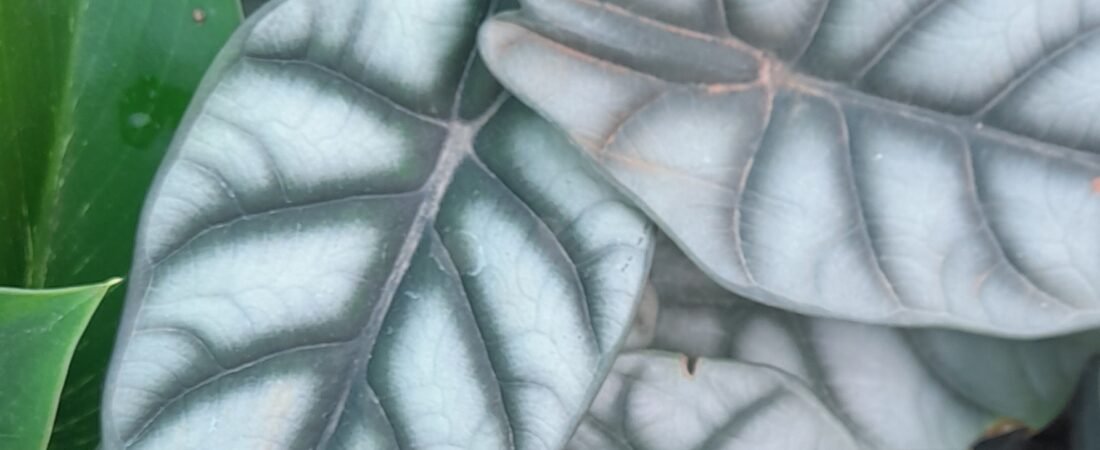
The first time you see an Alocasia Silver Dragon in person, you understand the hype. The leaves are thick and almost frosted — a pale silver-mint background split by deep green veins that look pressed into the surface, like scales. It’s the plant that makes people stop mid-scroll and go “wait, is that real?”
It’s also the plant that makes new owners panic around week three, when a leaf yellows and drops for no obvious reason.
Here’s the thing nobody tells you up front: Silver Dragon isn’t difficult, it’s particular. It wants a chunky mix, water on a rhythm, and a little more humidity than the average room offers. Get those three right and it’s honestly not fussy at all. Get them wrong and it will let you know immediately. This guide covers exactly how to get them right.
Meet the Silver Dragon
Alocasia baginda ‘Silver Dragon’ is a jewel alocasia — a group of compact, thick-leaved Alocasias native to the rainforest floors of Borneo. Jewel types stay small and grow from a corm (a firm little bulb at the base), which matters a lot for how you care for them.
What sets Silver Dragon apart:
- Leaves are stiff, almost succulent-thick, silvery-green with dark embossed venation.
- Size stays manageable — usually 12–18″ tall indoors, with leaves around 5–8″.
- Growth is slow. One new leaf every few weeks in the growing season is normal and good.
- It drops old leaves as it makes new ones. A mature plant often holds only 4–6 leaves at a time. Losing the oldest one while a new spear is unfurling is not a problem — that’s just how it works.
Its close cousin Alocasia ‘Dragon Scale’ (also A. baginda) has the same texture but a green, more metallic look. Care is identical, so everything here applies to both.
Light
Silver Dragon evolved under a rainforest canopy, so it wants bright, indirect light — plenty of brightness, no direct sun on the leaves.
- Best spot: a few feet back from an east-facing window, or beside a north-facing one.
- Also great: a south or west window filtered through a sheer curtain.
- Avoid: hours of unfiltered afternoon sun. It bleaches that silver right out and scorches thin patches into the leaf.
- Too little light shows up as long, stretched stems and smaller new leaves with washed-out veining.
If your brightest window still isn’t much, a full-spectrum LED grow light running 10–12 hours a day makes a real difference. Jewel alocasias respond to supplemental light faster than most houseplants.
Water
This is where most Silver Dragons are lost — and it’s almost always too much water, not too little.
Water when the top 1–2 inches of mix feel dry, then water thoroughly until it runs out the drainage hole. Dump the saucer. Never let the pot sit in standing water.
In practice that’s usually every 5–10 days in spring and summer, and noticeably less in winter. Don’t put it on a calendar — check first. A soil moisture meter is genuinely worth it here, because a chunky mix can feel dry on top while still holding water down at the corm.
How to read it:
- Yellowing lower leaf, soft at the stem → overwatered. Back off and check the roots.
- Crispy edges, drooping, dry mix → underwatered. Water and it usually perks up within a day.
- Leaves curling inward → often thirst or low humidity, sometimes too much light.
Tap water can also be a factor. Alocasias are sensitive to hard water and chlorine; if your tips brown consistently, try filtered water or let tap water sit out overnight before using it.
Soil
Do not plant a Silver Dragon in bagged potting soil straight from the sack. It holds far too much water around that corm and rot follows.
You want a chunky, fast-draining aroid mix that stays airy. Either buy a ready-made aroid potting mix, or blend your own:
- 2 parts orchid bark
- 1 part perlite or pumice
- 1 part coco coir or peat-based potting mix
- A handful of horticultural charcoal
Silver Dragon is also one of the easiest plants to convert to semi-hydro — LECA or pon in a reservoir pot. Many growers find it more forgiving that way, because the roots get consistent moisture with unlimited oxygen. If you’ve been fighting rot in soil, LECA clay pebbles are a legitimate fix, not just a trend.
Fertilizer
Slow grower, light feeder. During spring and summer, use a balanced liquid houseplant fertilizer diluted to half strength, roughly every 3–4 weeks.
Stop feeding in fall and winter when growth slows. Fertilizing a dormant Alocasia is a fast way to burn the roots — salts build up in a mix that isn’t being used.
If you’re in semi-hydro, switch to a hydroponic nutrient formula at every watering, heavily diluted, and flush the reservoir monthly.
Temperature & Humidity
- Temperature: 65–80°F is the sweet spot. Below 60°F it stalls; below 50°F it can drop leaves entirely.
- Humidity: 60% or higher is ideal. It survives at 45–50% but the leaf edges tend to crisp.
- Keep it away from heating vents, AC units, and drafty doors — sudden swings cause more leaf loss than steady imperfect conditions do.
Winter heating is the real threat. A small cool-mist humidifier running nearby does far more than misting, which raises humidity for about ten minutes and can encourage leaf spot. Grouping plants together also helps, and a digital hygrometer tells you whether you actually have a problem or just think you do.
Repotting
Silver Dragon likes being snug. Repot only every 1–2 years, or when roots are pushing out the drainage hole.
- Go up one pot size only. An oversized pot holds wet mix the roots can’t reach, and that’s rot waiting to happen.
- Repot in spring, at the start of the growing season.
- Terracotta helps if you’re a chronic overwaterer; plastic or glazed ceramic is better if you run dry.
- Handle the corm gently — it’s the plant’s storage organ and its whole insurance policy.
Expect a sulk for a week or two after repotting. That’s normal.
Propagation
Jewel alocasias propagate by corms and offsets, not by cuttings. There’s no “stick a leaf in water” shortcut here.
When repotting, look around the base and root ball for small firm bulbs, some already with tiny roots or a leaf. Those are your babies.
- Gently twist or cut a corm away from the parent.
- Peel off the papery brown outer layer — it slows sprouting.
- Set it pointed-end-up on damp sphagnum moss in a small container or a propagation box, half exposed.
- Keep it warm, humid, and bright-indirect. Crack the lid every couple days for air.
- Wait. Sprouting takes 2–8 weeks — sometimes longer. A firm corm that hasn’t sprouted isn’t dead.
Once it has a leaf and visible roots, pot it into your regular chunky mix.
Common Problems
- Yellow lower leaf while a new one unfurls — normal leaf turnover. Only worry if several yellow at once.
- Mushy stem, foul smell, plant collapses — root rot from overwatering. Unpot, cut away every soft root, dust with cinnamon or rooting powder, and repot in fresh dry mix. If the corm is still firm, you can save it.
- Fine webbing, stippled pale dots — spider mites, and Alocasias are their favorite target. Shower the leaves, then treat with neem oil or insecticidal soap every 5–7 days for three rounds. Check the leaf undersides.
- Fungus gnats — the mix is staying too wet. Let it dry further and set out yellow sticky traps.
- Brown crispy edges — low humidity or mineral buildup from tap water.
- Plant drops everything in winter — dormancy, not death. Keep the corm barely moist, stop fertilizing, and wait for spring.
Frequently Asked Questions
Is Alocasia Silver Dragon toxic to pets? Yes. Like all Alocasias it contains insoluble calcium oxalate crystals, which cause mouth pain, drooling, and vomiting if chewed. Keep it up high, away from cats and dogs.
Why did my plant lose all its leaves? Almost always dormancy triggered by cold or short days. Don’t toss it. Check that the corm is firm, cut back water, hold off on fertilizer, and it usually pushes a new leaf in early spring.
How fast does it grow? Slowly. One leaf every 3–5 weeks in summer is a healthy pace. It’s a plant you enjoy, not one you measure.
Can I keep one in a bathroom? Yes, if the bathroom has real light. The humidity is a genuine bonus — but a windowless bathroom won’t work without a grow light.
Silver Dragon or Dragon Scale — which is easier? Neither. They’re the same species with the same needs; pick on looks alone.
Quick-Start Gear Checklist
- 💧 Soil moisture meter
- 🪴 Chunky aroid mix + orchid bark + perlite
- 💨 Cool-mist humidifier + hygrometer
- 💡 Full-spectrum grow light
- 🐛 Neem oil + sticky traps
- 🌱 Sphagnum moss for corm propagation
Give a Silver Dragon a chunky mix, water it when the top inch dries, and keep the air a little damp — that’s genuinely most of it. The rest is patience, because this one grows on its own schedule. When a new spear unfurls into that silver-and-green scaled leaf, you’ll agree it was worth the wait. Happy growing, from all of us at BloomBabe. 🐉🌿