
Disclosure: This post contains affiliate links. If you buy through them, BloomBabe may earn a small commission at no extra cost to you. As an Amazon Associate, I earn from qualifying purchases. We only recommend gear we’d use on our own plants.
There’s a difference between an easy plant and a plant that fits an actual life. Easy usually means “forgiving if you make a mistake.” What you need, if your week is already full, is a plant that’s fine when you make no decisions at all — through a work trip, a newborn, a stretch of twelve-hour shifts, the month you barely cooked a real meal.
That’s a narrower list than the usual beginner roundup. A pothos is easy, but it still wilts dramatically if you disappear for three weeks. The plants below are the ones that go a month without you and look the same when you get back. We’ve also included the setup that buys you the most time per watering, because the pot and the soil matter as much as the plant.
What “low-maintenance” actually means
Three things separate a genuinely hands-off plant from one that just tolerates beginners:
It stores its own water. Thick leaves, fat stems, or chunky underground rhizomes are little reservoirs. Plants built this way can coast for weeks because they’re not depending on the soil staying damp.
It doesn’t care about humidity. Anything that needs a pebble tray, a daily misting, or a humidifier running nearby is a plant with a chore attached. Skip those and your list of ongoing tasks drops to one.
Slow growth is a feature. Fast growers need repotting, pruning, staking, and more fertilizer. A plant that puts out three new leaves a year is a plant that never asks you for anything on a Tuesday night.
Notice what isn’t on that list: light. Almost every plant here tolerates low light, but tolerating isn’t thriving. If your space is genuinely dim, a small LED grow light on an outlet timer solves it permanently and costs you about ten minutes once.
1. ZZ Plant — the one to buy if you only buy one
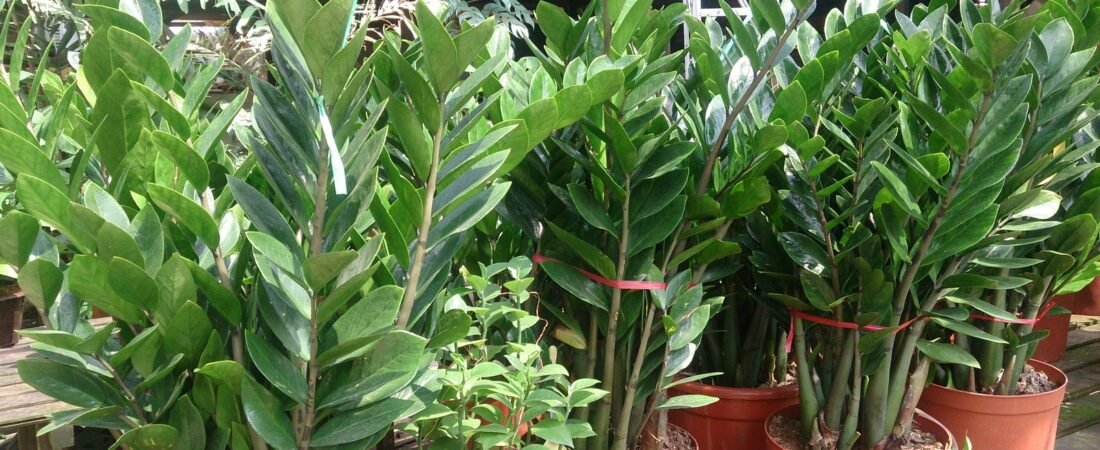
The ZZ (Zamioculcas zamiifolia) grows from potato-like rhizomes underground that hold serious water. It’s the plant we’ve watched survive an office that closed for six weeks with the blinds shut.
- Water: every 3–4 weeks, less in winter. A month is normal, not neglect.
- Light: anything from low to bright indirect. Genuinely flexible.
- Watch for: yellowing lower leaves, which almost always means too much water, not too little.
Its leaves are glossy enough that people assume it’s fake. Give it a fast-draining mix and a pot with a hole and it will outlast most of your furniture. There’s a full walkthrough in our ZZ Plant Care 101 guide if you want the details.
2. Snake Plant — the vacation-proof classic
Snake Plant (Dracaena trifasciata) is the other true set-and-forget option, and it’s the better choice if you want height and structure rather than a rounded shape.
- Water: every 2–4 weeks; monthly or less through winter.
- Light: low to bright indirect, though variegation stays sharper in brighter spots.
- Watch for: soft, mushy leaf bases. That’s overwatering and it’s the only real way to lose one.
Pot it in a terracotta pot with drainage. The unglazed clay wicks moisture out through the walls, which is exactly the safety margin an overwaterer needs.
3. Cast Iron Plant — the name is not marketing
Aspidistra elatior earned its name in Victorian parlors, surviving coal smoke, gas lamps, and drafty rooms. It handles deep shade better than anything else on this list, which makes it the answer for a north-facing room or a hallway with no window at all.
- Water: every 2–3 weeks, whenever the top couple of inches are dry.
- Light: low to medium. Direct sun will scorch it.
- Watch for: almost nothing. It’s slow and steady to the point of being boring, which is the compliment.
It’s harder to find at big-box stores than the others here, so it’s worth ordering a cast iron plant online if you have a dark corner that’s defeated everything else.
4. Pothos — the one that tells you what it needs
Pothos isn’t the most drought-tolerant plant here, but it earns its spot for a different reason: it communicates. The leaves go soft and slightly droopy a day or two before there’s any real problem, then perk back up within hours of a drink. For a busy person, a plant with a visible warning light is worth a lot.
- Water: roughly weekly, or when the leaves start to soften.
- Light: low to bright indirect; golden and marble varieties keep more variegation in brighter light.
- Watch for: long bare stems with leaves only at the ends, which means it wants more light.
If you like the trailing look but want less frequent watering, a self-watering pot turns a weekly plant into a roughly every-two-to-three-week plant with no change in habit.
5. Aloe Vera — useful and nearly unkillable
Aloe is a succulent, so it’s storing water in every leaf. It also earns its counter space: snap off a piece for a kitchen burn and you have an actual reason to keep it alive.
- Water: every 3–4 weeks, and always let the soil dry out completely first.
- Light: bright light, including some direct sun. This is the one plant here that genuinely wants a sunny window.
- Watch for: flat, splaying leaves, which usually mean not enough light rather than a watering problem.
Plant it in cactus and succulent soil mix. Regular potting soil holds far too much water around those roots.
6. Hoya — the plant that likes being ignored
Hoyas have thick, waxy leaves and want to be a little root-bound and a little underwatered. That’s an unusual combination: neglect isn’t just tolerated, it’s the condition under which they bloom.
- Water: every 2–3 weeks, letting it dry out well between.
- Light: bright indirect. This is the one to put in your best window.
- Watch for: wrinkled leaves, which mean it’s finally thirsty. Cut off a flower stalk and you lose next year’s blooms — leave the bare stubs alone.
Hoya carnosa is the most widely available and the most forgiving. If you want a plant that rewards you for doing nothing, this is it.
7. Chinese Evergreen — color without the fuss
Aglaonema gives you pink, silver, or cream patterning without the demands that usually come with a showy plant. It’s a solid pick if the other options on this list feel too plain and you’re tempted by a calathea you don’t have time for.
- Water: every 1–2 weeks; it likes slightly more moisture than the succulent types.
- Light: low to medium indirect. Darker green varieties handle less light; pink ones want more.
- Watch for: cold. Below about 60°F it sulks, so keep it off windowsills in winter.
Set it up once, coast for months
The plant matters less than the setup around it. Three decisions, made once, do most of the work:
Use the right soil. A dense, water-retaining mix is what actually kills low-maintenance plants — the roots sit wet for weeks. Loosen an ordinary bag of soil with a couple of handfuls of perlite, or use a chunky aroid potting mix for anything in the pothos and philodendron family.
Never use a pot without a drainage hole. A cachepot with no hole is a bathtub your plant can’t get out of. If you love a particular decorative pot, keep the plant in a plain nursery liner and drop it inside.
Remove the guesswork. A soil moisture meter costs less than a plant and settles the only question you’ll ever have. Push it in, read it, walk away. It’s especially worth it if more than one person in the house waters, since that’s how plants quietly get watered twice.
For long trips, group your plants together away from direct sun before you go and give everything a thorough soak. Grouped plants create a slightly humid pocket and dry more slowly. You don’t need a watering globe or a bottle system for two weeks — every plant on this list will be fine.
Quick answers
How many should I start with? Three. One per room you actually spend time in, all from this list, all on the same watering rhythm. Uniform needs mean one decision instead of three.
Do I need to fertilize? Barely. A diluted houseplant fertilizer twice over spring and summer covers everything here. Skip fall and winter entirely.
What about pets? ZZ, snake plant, pothos, aloe, and Chinese evergreen are all toxic if chewed — usually a bad stomach rather than an emergency, but worth placing high. Hoyas are the pet-safe pick of the group.
Something is going wrong anyway. Nine times out of ten it’s water, and nine times out of ten it’s too much. Let the soil dry out completely before you change anything else. If you spot pests while you’re in there, neem oil handles the common ones.
Quick-Start Gear Checklist
- 💧 Soil moisture meter
- 🏺 Terracotta pots with drainage
- 🪴 Perlite + cactus & succulent mix
- 💦 Self-watering planters for the thirstier ones
- 💡 LED grow light with an outlet timer
- 🌿 Houseplant fertilizer
A busy season isn’t a reason to skip plants — it’s a reason to pick better ones. Choose two or three from this list, put them in pots that drain, and let them do their slow, quiet thing while the rest of your life is loud. They’ll still be there when things settle down. Happy growing, from all of us at BloomBabe. 🌱