
Disclosure: This post contains affiliate links. If you buy through them, BloomBabe may earn a small commission at no extra cost to you. As an Amazon Associate, I earn from qualifying purchases. We only recommend gear we’d use on our own plants.
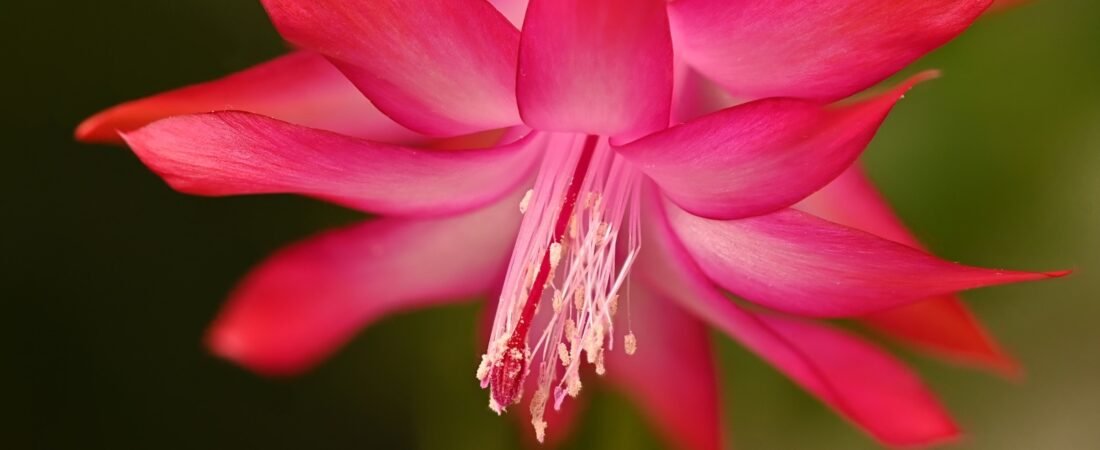
Some plants are décor. The Christmas cactus is a tradition. It’s the plant that sits on your grandmother’s windowsill for thirty years, gets split into cuttings for every cousin, and bursts into pink and fuchsia flowers right when the house fills up for the holidays.
It also has a reputation for being moody: buds that drop overnight, plants that refuse to flower at all. The good news is that none of it is random. Once you understand where this plant comes from and what actually triggers its blooms, it becomes one of the easiest flowering houseplants you can own. And right now, in October, is exactly when the work that decides this year’s flowers happens.
1. Meet the Christmas Cactus
Forget everything you know about desert cacti. The Christmas cactus (Schlumbergera) comes from the misty coastal mountains of southeastern Brazil, where it grows as an epiphyte, perched in the crooks of trees and on mossy rocks in cool, humid forest. No sand, no blazing sun. Think dappled shade, frequent rain, and roots that cling to bark and leaf litter.
That origin explains almost every care rule below. It wants more water than a desert cactus, a chunkier soil than a typical houseplant, and soft light instead of a scorching windowsill.
There are actually three “holiday cacti,” and the one you bought is probably not a true Christmas cactus:
- Thanksgiving cactus (Schlumbergera truncata): segments with pointed, claw-like teeth along the edges. Blooms around November. This is what most garden centers sell as a “Christmas cactus.”
- Christmas cactus (Schlumbergera × buckleyi): segments with smooth, rounded, scalloped edges. Blooms closer to December. Often the heirloom plants passed down through families.
- Easter cactus (Schlumbergera gaertneri, formerly Hatiora or Rhipsalidopsis): rounder segments with little bristles at the tips and star-shaped flowers. Blooms in spring and is a bit fussier.
Care for the first two is nearly identical, so everything here works for either. Check the edges of a segment and you’ll know which one you have.
2. Light
Bright, indirect light is the sweet spot. An east-facing window is ideal, and a spot a few feet back from a south or west window works well too. A little gentle morning sun is fine.
- Too much direct sun: segments turn reddish-purple or look bleached. That color is stress, not a cute fall look.
- Too little light: leggy, thin growth and few or no flowers.
If your home runs dark in winter, a small LED grow light helps through spring and summer. Just keep it off at night during the fall bloom-setting window (more on that below), ideally with an outlet timer so you never forget.
3. Water
Because it’s a rainforest plant, the Christmas cactus drinks more than its desert cousins, but it still hates sitting in soggy soil.
- Water when the top inch or so of soil feels dry. For most homes that’s roughly every 1–2 weeks in spring and summer.
- Water thoroughly, let it drain completely, and empty the saucer. Never leave it standing in water.
- During bud set and bloom, keep the soil lightly and evenly moist. A bone-dry pot is one of the top causes of bud drop.
- After flowering, give it a short rest of about a month with a little less water, then return to normal.
If you tend to overwater (no judgment, we’ve all done it), a soil moisture meter takes the guessing out of it.
4. Soil
In the wild, its roots wrap around bark and debris, so it needs airflow around the roots. Dense, peaty potting soil holds too much water and invites rot.
Our go-to blend:
- 2 parts quality potting mix
- 1 part orchid bark
- 1 part perlite
Short on time? A bagged cactus and succulent soil with a handful of orchid bark stirred in gets you most of the way there. Whatever you use, plant it in a pot with a drainage hole. A terracotta pot is a great match because it breathes and dries evenly.
5. Fertilizer
Feed during active growth, then stop so the plant can focus on flowers.
- Spring through late summer: a balanced houseplant fertilizer at half strength every 2–4 weeks.
- From early fall: stop feeding. Lush new growth in autumn competes with bud formation.
- Winter, while blooming: no fertilizer needed.
If you’d like a little extra support heading into summer, a gentle bloom booster fertilizer at half strength is fine, but it’s optional. Light and temperature matter far more for flowers than food does.
6. Temperature & Humidity
Comfortable room temperatures of 60–70°F suit it most of the year. It doesn’t love heat: above the mid-70s, especially in fall, it often refuses to set buds.
Humidity is where many homes fall short, especially once the heat kicks on. It’s happiest around 50% humidity or higher. Group it with other plants, set it on a humidity tray, or run a small humidifier nearby. Keep it away from heating vents, radiators and drafty doors, which are classic bud-drop culprits.
7. How to Make It Bloom (the October Secret)
This is the part everyone wants. Christmas cacti set flower buds in response to long nights and cool temperatures. In nature, autumn handles that automatically. Indoors, our lamps and cozy thermostats can confuse it.
Starting in early-to-mid fall, give it one (or both) of these triggers for about 6 weeks:
- Long, dark nights: 12–14 hours of uninterrupted darkness each night. A spare room you don’t use in the evening works, or a closet overnight with the plant back in its bright spot by day. Even a lamp switched on for a few minutes can reset the clock.
- Cool temperatures: nights around 50–55°F. A cool sunroom, an unheated guest room or a bright spot near (not touching) a chilly window works well. At these temperatures the plant usually sets buds even without strict darkness.
Combine those with slightly reduced watering (never bone-dry) and no fertilizer, and you should see tiny buds forming at the segment tips. Once buds appear, move it back to its normal spot and then leave it alone. Sudden changes in light, temperature or position are what make it drop those buds. Some growers even avoid rotating the pot once buds show.
8. Repotting
Christmas cacti bloom best when slightly snug in their pots, so don’t rush it.
- Repot every 2–3 years, or when roots are coming out of the drainage hole.
- Do it in spring, after flowering, never while it’s in bud or bloom.
- Go up only one pot size (about an inch wider) and use fresh, chunky mix.
9. Propagation
This is the fun part. It’s how these plants become family heirlooms.
- In late spring, after its rest, gently twist off a piece that’s 2–4 segments long, separating at a joint. A clean pair of pruning snips works if it doesn’t twist free easily.
- Let the cutting dry for a day or two so the end calluses.
- Push the bottom segment about a quarter of the way into slightly moist mix. Plant 3–5 cuttings together for a fuller pot.
- Keep it in bright, indirect light with the soil barely moist. Roots usually form in 3–6 weeks, and you’ll know it took when new segments appear.
Pinching off a few segment tips after flowering also encourages branching, which means more tips, which means more flowers next year.
10. Common Problems
- Buds dropping before they open: a sudden change in temperature, light or location, a draft, or soil drying out completely. Pick a spot and keep conditions steady.
- No flowers at all: nights too warm or too bright in fall. Revisit the October routine above.
- Limp, wrinkled segments: can mean either underwatering or root rot from overwatering. Check the soil. If it’s soggy and roots are brown and mushy, trim the rot and repot in fresh, chunky mix.
- Reddish or purple segments: too much direct sun, cold stress or drought. Move it to softer light and check your watering.
- Segments falling off: usually overwatering or a sudden temperature swing.
- Pests: mealybugs (white cottony fluff in the joints) and fungus gnats show up occasionally. Dab mealybugs with rubbing alcohol on a cotton swab and treat with neem oil; for gnats, let the top of the soil dry out more between waterings.
Frequently Asked Questions
Is Christmas cactus toxic to pets? The ASPCA lists Christmas cactus as non-toxic to cats and dogs. Eating a lot of the fibrous plant material can still cause mild stomach upset, so it’s best kept out of nibbling range.
My “Christmas cactus” blooms at Thanksgiving. Is something wrong? Not at all. You most likely have a Thanksgiving cactus (pointed segment edges), which is what most stores sell. It’s a gorgeous plant on its own schedule.
Can it bloom more than once a year? Sometimes. Healthy plants occasionally put out a smaller second flush in late winter or spring if conditions mimic another short-day period.
How long do Christmas cacti live? With decent care, decades. Plants 50 years old or more are not unusual, which is why so many get passed down through families.
Can I put it outside in summer? Yes. A shady porch or a spot under a tree is lovely for it from late spring until nights drop toward 50°F. Keep it out of direct afternoon sun and bring it in before frost.
Quick-Start Gear Checklist
- 🪴 Orchid bark + perlite for a chunky mix
- 🏺 Terracotta pot with drainage
- 💧 Soil moisture meter
- 🌿 Balanced houseplant fertilizer
- 💨 Humidity tray or humidifier
- ⏲️ Outlet timer for grow lights during bloom season
- 🐛 Neem oil
A Christmas cactus asks for very little: soft light, a chunky mix, steady watering, and a few weeks of long, cool autumn nights. Give it that, then resist the urge to fuss once the buds appear, and it will reward you with a wave of color every holiday season for years. Maybe even long enough to hand a cutting down to someone you love. Happy growing, from all of us at BloomBabe. 🌸