
Disclosure: This post contains affiliate links. If you buy through them, BloomBabe may earn a small commission at no extra cost to you. As an Amazon Associate, I earn from qualifying purchases. We only recommend gear we’d use on our own plants.
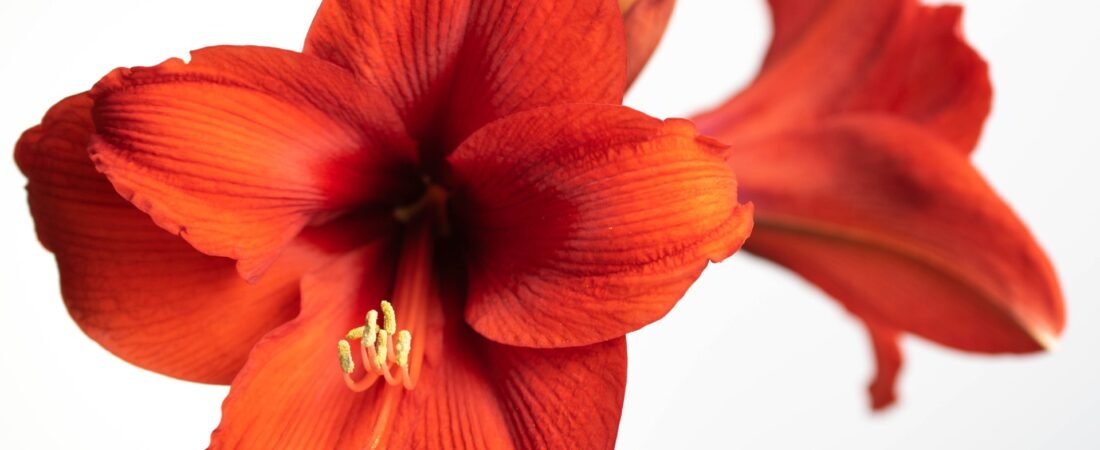
There is one houseplant project that pays off in six to eight weeks, asks almost nothing of you, and ends with a trumpet-shaped flower the size of your hand. That’s the amaryllis. Pot a bulb in late October or early November and you’ll have stalks of red, white, or candy-striped blooms opening right around the holidays, when the rest of your plant shelf is doing its best impression of a nap.
This guide walks you through forcing amaryllis indoors from start to finish: picking a bulb that will actually flower, potting it so it doesn’t tip over, timing the bloom for a specific week, and (the part most guides skip) getting the same bulb to flower again next year.
1. Meet the Amaryllis
The big bulb sold as “amaryllis” every fall is botanically a Hippeastrum hybrid, a South American native bred into hundreds of named varieties. The true Amaryllis belladonna is a South African garden bulb and isn’t what’s in the box. The mix-up doesn’t matter for care, but it explains why advice online sometimes contradicts itself.
A few varieties worth knowing by name:
- Red Lion — the classic deep red, reliable and fast, the one most kits contain.
- Apple Blossom — soft white brushed with pink, very romantic.
- Minerva — red with a white star at the center, striking on a dark table.
- Double varieties like Nymph or Dancing Queen — ruffled, peony-like blooms if you want drama.
Each bulb sends up one to three thick stalks, and each stalk opens three to six flowers.
2. Choose a Bulb That Will Actually Bloom
The bulb you buy decides most of the outcome. Flowers for this season were already formed inside the bulb before it ever reached you, so a big, healthy bulb is a bigger show, full stop.
- Go big. Bulb size is measured by circumference, and the largest grades (often labeled “jumbo” or 34–36 cm and up) usually throw two or three stalks. Smaller bulbs give you one.
- Squeeze it. It should feel firm and heavy, like a good onion. Soft spots, mushy patches, or a hollow feel mean rot.
- Check for red streaks. Small red marks on the outer scales are common and mostly harmless. Deep red blotches that run into the bulb can be a fungal disease called red blotch; skip those.
- Look for roots. A few dry, fleshy roots at the base are a good sign. A pale shoot already pushing up is fine as long as it isn’t bent.
Boxed kits come with a pot and a compressed soil disc, and they work. If you’d rather choose your own container, loose amaryllis bulbs are usually larger. You’ll also see wax-coated bulbs that need no soil or water at all; they’re a fun gift, but they bloom once and get tossed, so skip them if you want a plant you can keep.
3. Pot It Up (The Right Way)
Amaryllis are top-heavy and like a snug fit, so the pot matters more than you’d think.
Pick the pot. Choose one about 1–2 inches wider than the bulb with a drainage hole. A heavy terracotta pot or a weighty ceramic one keeps a 24-inch stalk from pitching your plant onto the floor. Slide it into a prettier decorative cachepot if you want it on the holiday table.
Mix the soil. Any good indoor potting mix works; stir in a handful of perlite so water drains fast. Amaryllis rot far more often than they dry out.
Plant it shallow. This is the step people get wrong. Set the bulb so the top third sits above the soil line, shoulders and neck exposed. Burying it fully invites rot. Firm the soil around the lower two-thirds, leaving an inch below the rim for watering.
Water once, thoroughly, until it runs out the bottom. Then put the watering can down and walk away.
4. Light, Water, and Warmth During Growth
For the first couple of weeks the bulb is running on stored energy and barely needs you.
- Warmth starts the clock. A spot around 70–75°F gets growth going fastest. The top of the fridge, a sunny kitchen counter, or near (not on) a radiator all work.
- Water sparingly until you see growth. Keep the soil barely moist. Once a shoot is a few inches tall, water whenever the top inch of soil feels dry. A soil moisture meter takes the guesswork out if you’re nervous.
- Give it bright light once the stalk appears. A south or west window is ideal. In a dim apartment or a cloudy December, a small LED grow light keeps the stalk short and sturdy instead of pale and leggy.
- Rotate the pot a quarter turn every couple of days. The stalk leans hard toward light; rotating keeps it straight.
- No fertilizer yet. Everything the flower needs is already in the bulb. Save feeding for after it blooms.
Expect buds to show in roughly 4–6 weeks and flowers to open in 6–8 weeks, give or take. Dutch-grown bulbs tend to run slower (sometimes 10 weeks or more) and often send up leaves first; South African-grown bulbs, usually sold as “Christmas flowering,” are faster and bloom before the leaves. The box or listing usually says which you have.
5. Timing Blooms for a Specific Date
Want flowers on the table for a particular holiday? Work backward.
- For Christmas week: pot a Christmas-flowering bulb in the first week of November, or a standard bulb in mid-to-late October.
- For New Year’s or a January party: pot in mid-November.
- For a month of continuous color: pot a new bulb every two weeks from late October through December. Three bulbs, staggered, cover the whole season.
If a bulb is ahead of schedule and you need to slow it down, move it somewhere cooler (around 60°F) and give it less light. If it’s behind, more warmth and brighter light will speed it up. You have a week or two of wiggle room in each direction.
Once the first flower opens, move the pot out of direct sun and somewhere cooler (60–65°F). Blooms last noticeably longer in a cool room than next to a heat vent. Pinch off each flower as it fades to send energy into the next bud rather than into seed pods.
6. Keep the Stalk From Flopping
A stalk with four open blooms is heavy, and it will lean, and sometimes snap, without help.
- Slide a slim bamboo plant stake into the soil beside (not through) the bulb and loosely tie the stalk with soft plant ties at two points.
- A decorative plant support ring looks nicer on a holiday table than bare bamboo.
- Keep rotating the pot. Most flopping starts as a lean nobody corrected.
If a stalk snaps anyway, cut it cleanly and put it in a vase. Amaryllis are excellent cut flowers and the buds keep opening for a week or more.
7. After the Bloom: Getting It to Flower Again Next Year
Here’s where amaryllis beats every other holiday plant. Treat the bulb right for nine months and it will bloom again, usually bigger. Here’s the full cycle.
Right after flowering (January–February): Cut the spent stalk about an inch above the bulb, but leave every leaf. The leaves are how the bulb refuels. Move it to your brightest window and start feeding every two to four weeks with a balanced houseplant fertilizer at half strength. Water when the top inch is dry.
Spring and summer (March–August): Keep it growing like any other houseplant. If you have a patio or balcony, move it outdoors once nights stay above 50°F, in morning sun or bright shade, and keep feeding. More leaves now means more flowers later. It will look like a floppy green fountain all summer; that’s the job.
Late summer (late August–September): Stop feeding and gradually stop watering. Let the leaves yellow and dry, then cut them off. Move the pot, bulb and all, somewhere cool, dark, and dry (around 50–55°F), like a basement or garage, for 8–10 weeks. This rest is what triggers the next bloom.
Mid-to-late fall: Bring it back into warmth and light, top off the soil (or repot into fresh mix every two or three years), water once, and start over. A well-fed bulb often comes back with two or three stalks instead of one, and a bulb that got fatter over the summer is a bulb that will bloom.
8. Common Problems (and Easy Fixes)
- Leaves but no flower stalk: the bulb was too small, didn’t get enough light and food last summer, or skipped its cool rest. Grow it on for a year and try again.
- Stalk growing crooked: light is coming from one side. Rotate daily and stake if needed.
- Soft, mushy bulb or a foul smell: rot from overwatering or deep planting. Unpot it, cut away soft tissue, let it dry a few days, and repot in fresh, gritty mix with the shoulders exposed. Caught early, it often survives.
- Red streaks spreading across leaves and stalk: red blotch (Stagonospora). Keep foliage dry, avoid splashing when you water, and buy clean bulbs; badly infected bulbs are best discarded.
- Buds that dry up before opening: usually underwatering once the stalk is tall, or a spot that’s too hot and dry. Water a little more and move it off the heat vent.
- Tiny white fuzz in the leaf bases: mealybugs. Dab with rubbing alcohol on a cotton swab and follow up with neem oil.
Frequently Asked Questions
Is amaryllis toxic to cats and dogs? Yes. The whole plant contains lycorine, and the bulb has the most. Chewing causes drooling, vomiting, and lethargy. Keep it on a high shelf or in a room pets don’t use, and skip it entirely if you have a determined plant-chewer.
Can I plant the bulb outside after it blooms? Only in warm climates (roughly USDA zones 8–10) where the ground never freezes. Everywhere else, keep it as a potted houseplant and follow the cycle above.
Do I really need to give it a dormant period? Strictly speaking, no; some people keep them growing year-round and get sporadic blooms. But the cool, dry rest is the most reliable way to get a full flush on a schedule you control.
What about paperwhites? Paperwhite narcissus are the other classic holiday bulb and even easier: no soil, just pebbles and water, blooming in about four weeks. A bowl of paperwhite bulbs started in late November makes a lovely companion to an amaryllis, though unlike amaryllis they won’t rebloom.
Quick-Start Gear Checklist
- 🌷 Jumbo amaryllis bulbs
- 🏺 Heavy terracotta pot with drainage
- 🪴 Indoor potting mix + perlite
- 💧 Soil moisture meter
- 🎋 Bamboo stakes and soft plant ties
- 💡 LED grow light for dark winter windows
- 🌿 Balanced liquid fertilizer for the after-bloom months
Pot a bulb this week, keep it warm and barely watered, and in six to eight weeks you’ll have the showiest flower in the house just as the days get shortest. Keep the leaves going afterward and it’ll be back next winter, bigger than before. Happy growing, from all of us at BloomBabe. 🌱