
Disclosure: This post contains affiliate links. If you buy through them, BloomBabe may earn a small commission at no extra cost to you. As an Amazon Associate, I earn from qualifying purchases. We only recommend gear we’d use on our own plants.
You water your pothos, lean in to admire a new leaf, and a cloud of tiny black specks lifts off the soil and drifts toward your face. Welcome to the fungus gnat club. Almost every plant person joins eventually, and almost nobody enjoys the membership.
The good news: these pests are more annoying than dangerous, and they are very beatable. The even better news: once you understand their life cycle, you can get rid of them for good instead of swatting at them forever. Here’s the full plan.
1. Know Your Enemy
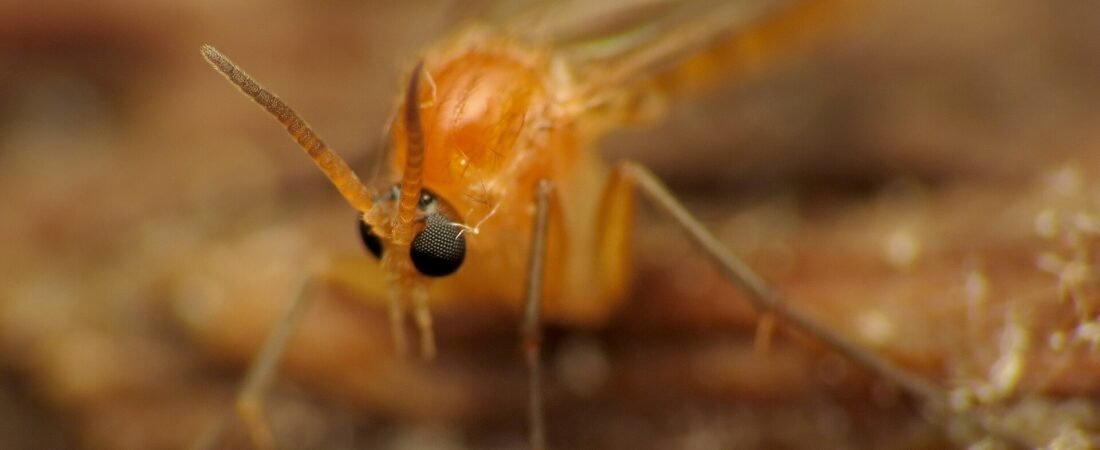
Fungus gnats are small, dark, mosquito-like flies about an eighth of an inch long. The adults are mostly a nuisance. They flutter near windows, crawl on the soil surface, and land in your coffee.
The real work happens underground. Adults lay eggs in damp potting mix. Within a few days the eggs hatch into tiny, translucent larvae with black heads. The larvae feed on fungus and decaying organic matter in the soil, and in heavy infestations they nibble fine roots too. That matters most for seedlings, cuttings, and young plants, which can stall or collapse. A healthy mature plant usually shrugs them off.
The whole cycle, egg to adult, takes roughly three to four weeks. A female can lay a couple hundred eggs. That’s why a few gnats become a swarm so fast, and why killing only the flying adults never works. You have to break the cycle at the soil.
2. Why You Have Them (It’s Not Your Fault)
Gnats show up because the top layer of your soil stays wet. Common culprits:
- Watering on a schedule instead of when the plant needs it
- Pots without drainage holes, or a saucer full of standing water
- Dense, peat-heavy potting mix that holds moisture for days
- Low light, which slows how fast soil dries out, especially in winter
- Bagged mix that came home with eggs already in it
Hands up if you’ve brought one in with a new plant. Same.
3. Step One: Let the Soil Dry Out
This is the single most effective thing you can do. Larvae need moisture, and the top inch or two of soil is where they live.
- Stop watering until the top 2 inches of soil are completely dry. For many plants that means a week or more.
- Empty any saucer or cachepot water right away.
- Water from the bottom when you do water, by setting the pot in a tray for 20 to 30 minutes. The surface stays drier.
- Check the soil with your finger, or use a soil moisture meter to take the guesswork out, especially for deep pots.
A word of caution: only do this for plants that tolerate drying. For a moisture-lover like a calathea, switch to the other steps and keep the soil barely damp, not soggy.
4. Step Two: Catch the Adults
Trapping adults will not end the infestation on its own, but it stops new eggs and shows you how bad things are.
- Yellow sticky traps. Gnats are drawn to yellow. Lay a few flat on the soil or stake them into pots. Grab a pack of yellow sticky traps for fungus gnats and swap them out when they fill up.
- Apple cider vinegar trap. A small jar with an inch of apple cider vinegar, a drop of dish soap, and a poked-through plastic wrap lid does the job on a budget.
- Check the count weekly. If the number of gnats on the traps is dropping, you’re winning.
5. Step Three: Kill the Larvae
This is where infestations actually end. You have a few good options. Pick one and be consistent.
Mosquito bits (Bti). These are small granules containing Bacillus thuringiensis israelensis, a naturally occurring bacterium that is toxic to gnat and mosquito larvae but harmless to plants, people, and pets. Soak a teaspoon of mosquito bits for fungus gnats in water for 30 minutes, then use that “tea” to water your plants. Repeat weekly for three to four weeks to cover a full life cycle. This is our go-to.
Beneficial nematodes. Live microscopic worms that hunt larvae in the soil. Beneficial nematodes (Steinernema feltiae) are very effective, but they’re perishable and need moist soil, so they work best if you can’t let things dry out.
Hydrogen peroxide drench. Mix one part 3% hydrogen peroxide with four parts water and water the plant with it. It fizzes, kills larvae on contact, and breaks down into water and oxygen. Use it as a one-off rescue, not a weekly habit, since it can stress delicate roots.
Neem oil soil drench. A diluted neem oil soak makes the soil unpleasant for larvae. Always mix it with a little soap as an emulsifier and follow the label.
6. Step Four: Make the Soil Unwelcome
Once the larvae are handled, make it hard for the next batch to move in.
- Top-dress with sand or grit. A half-inch layer of horticultural sand or fine gravel dries quickly and blocks adults from laying eggs in damp soil.
- Switch to a chunkier mix. Add perlite, bark, and pumice to dense potting soil so it drains and dries faster. Our guide to potting soil types goes deeper on this.
- Use pots with real drainage. If your favorite decorative pot has no hole, keep the plant in a plastic nursery pot inside it and lift it out to water.
- Go soil-free. Plants in water or semi-hydro are essentially gnat-proof because larvae have no organic soil to eat.
7. When Things Are Really Bad
If a plant is badly infested, or you’ve tried everything and the gnats keep coming:
- Take the plant out of its pot.
- Rinse the roots gently under lukewarm water, removing as much old soil as you can.
- Trim any brown, mushy roots.
- Repot in fresh, dry-ish, well-draining mix in a clean pot.
- Treat the new soil with mosquito bits tea, and keep traps out for a few weeks.
It’s a bit of work, but it resets the whole situation, and the plant often perks up afterward.
8. Prevention Checklist
- Quarantine new plants for two weeks and keep an eye on the soil
- Let the top inch or two dry between waterings, adjusted for each plant
- Store opened potting mix in a sealed bin so adults can’t lay in it
- Skip decorative moss on top of soil, which holds moisture
- Keep a yellow sticky trap in a couple of plants permanently as an early warning
- Clear fallen leaves and debris off the soil surface
- Water less in winter when light is low and soil stays damp longer
9. FAQ
Are fungus gnats harmful to people or pets?
No. They don’t bite and they don’t carry disease. They’re just irritating.
Can fungus gnats kill my plant?
Rarely, for established plants. Seedlings, cuttings, and stressed plants are more at risk because larvae feed on tender roots.
How long does it take to get rid of them?
Plan on three to four weeks of consistent treatment, since you’re waiting out an entire life cycle. You should see fewer adults within about a week.
Do fungus gnats come from my potting soil?
Often, yes. Bagged mixes can contain eggs or larvae, and any soil rich in organic matter that stays damp is a welcome mat.
Is it fungus gnats or fruit flies?
Fungus gnats are slimmer, darker, and slow, hovering around plants. Fruit flies are tan, rounder, and hang around ripe fruit and the kitchen.
Will cinnamon or a layer of matchsticks work?
They’re popular home tricks, but we haven’t found them reliable. Stick to drying out the soil and killing larvae.
10. Quick-Start Gear Checklist
- Yellow sticky traps to catch adults
- Mosquito bits (Bti) to kill larvae
- Soil moisture meter so you stop guessing
- Perlite or pumice for a faster-draining mix
- Pots with drainage holes and saucers you’ll actually empty
- Hydrogen peroxide (3%) for a one-time rescue drench
Final Thoughts
Fungus gnats feel like a personal failure the first time they show up. They aren’t. They’re a sign that your soil is a little too cozy, and that’s easy to fix. Dry things out, trap the adults, treat the larvae, and change the conditions that invited them. Give it a month and you’ll be gnat-free and watering with more confidence than before.
Happy growing, from all of us at BloomBabe.