
Disclosure: This post contains affiliate links. If you buy through them, BloomBabe may earn a small commission at no extra cost to you. As an Amazon Associate, I earn from qualifying purchases. We only recommend gear we’d use on our own plants.
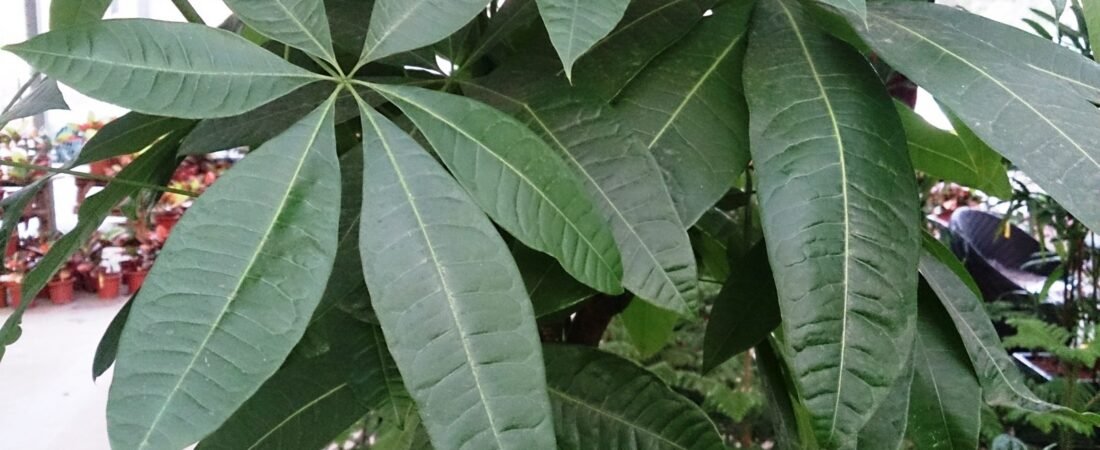
The Money Tree is the plant that shows up in office lobbies, on housewarming doorsteps, and in every “good luck” gift basket, and it earns the spot. Those glossy, hand-shaped leaves and that braided trunk look like something a florist fussed over, yet the plant underneath is a tough, forgiving tropical that asks for surprisingly little. The catch is that most of the care advice floating around treats it like a succulent or like a fern, and it is neither. Here’s how a Money Tree actually likes to live, plus the one nursery habit that quietly kills more of them than anything else.
1. Meet the Money Tree
The Money Tree (Pachira aquatica) is also sold as Guiana chestnut, Malabar chestnut, or saba nut. In the wild it’s a wetland tree from Central and South America that can tower over 60 feet, with trunks that stand in seasonally flooded ground. Indoors it settles into a polite 3 to 6 feet, though a happy one in a big pot will keep going.
Three things to know up front:
- The braid is man-made. Nurseries plant several young saplings together and braid the flexible trunks while they’re still green. Each strand is a separate tree sharing one pot, which matters when you water, repot, or lose a trunk.
- The leaves are palmate, usually five to seven leaflets fanning out from one stem like fingers on a hand. New leaves emerge bronze or light green and darken as they mature.
- It’s pet-safe. The ASPCA lists Pachira aquatica as non-toxic to cats and dogs, which makes it one of the easiest statement plants to keep in a home with a leaf-chewing animal.
2. Light
Money Trees want bright, indirect light and will tolerate medium light with slower, leggier growth. Think a few feet back from an east window, or beside a south or west window with a sheer curtain softening the afternoon sun.
- Too little light shows up as long stretches of bare stem between leaves, small new leaves, and a plant that leans hard toward the window.
- Too much direct sun scorches the leaves, leaving pale, papery patches that never recover.
- Rotate the pot a quarter turn every time you water. Money Trees lean fast, and a braided trunk that grows crooked stays crooked.
If the only spot you have is a dim corner, an LED grow light running 10 to 12 hours a day keeps the growth full and the leaves a deep green.
3. Water
This is where Money Trees get mislabeled. The “aquatica” in the name and the wetland origin convince people to keep the soil moist, and that’s exactly how you end up with a yellow, droopy, root-rotted plant. Indoors, in a pot, they like to dry out partway between drinks.
- Check before you water. Push a finger 2 inches into the soil, or use a soil moisture meter for a taller pot where your finger can’t reach. Water when the top 2 to 4 inches feel dry.
- Water deeply, then drain. Soak until water runs out of the drainage hole, let it drain fully, and never let the pot sit in a saucer of standing water. A long-spout indoor watering can gets under the leaves without splashing the trunk.
- Expect roughly every 1 to 2 weeks in spring and summer and every 2 to 3 weeks in winter, but treat those as ranges, not a schedule.
The nursery habit to undo: many Money Trees are sold with a layer of decorative pebbles glued to the top of the soil, in a pot with no drainage hole. The glued stones hide the soil so you can’t check moisture, and the sealed pot holds every drop you add. Peel the pebble layer off (it usually lifts as one sheet), move the plant into a pot with a drainage hole, and your odds go up dramatically.
4. Soil
A Money Tree needs a mix that holds a little moisture but drains freely, so the roots get air between waterings.
A good recipe is two parts quality indoor potting mix to one part perlite, with a handful of orchid bark if you want extra air pockets. If mixing isn’t your thing, a bagged cactus and succulent mix blended half and half with regular potting soil lands in the right place.
Always use a pot with a drainage hole. Terracotta is a smart choice for heavy-handed waterers because it wicks moisture out through the walls; glazed ceramic holds water longer and suits people who tend to forget.
5. Fertilizer
Money Trees are moderate feeders during the growing season and want nothing at all in the cold months.
- Spring through early fall: feed once a month with a balanced liquid houseplant fertilizer diluted to half the label strength.
- Late fall and winter: stop. Growth slows and unused fertilizer salts build up in the soil, browning the leaf edges.
- Flush the pot once or twice a year by running water through it for a minute to rinse out accumulated salts.
6. Temperature & Humidity
Comfortable for you is comfortable for the Money Tree: 65 to 80°F is ideal, and it will cope with brief dips to the mid-50s. What it won’t forgive is a cold draft from a door or a blast from a heating vent, both of which trigger sudden leaf drop.
Humidity is where you can go from “fine” to “lush.” Average household air is tolerable, but the plant is at its glossiest around 50 percent and up. In winter, when forced-air heat dries a room out, a small plant humidifier nearby, or a pebble tray under the pot, keeps leaf edges from crisping.
7. Repotting
Money Trees grow at a moderate pace and actually prefer being slightly snug, so plan on repotting every 2 to 3 years, in spring, or when roots circle the surface or poke out of the drainage hole.
- Go up one pot size only, about 2 inches wider. A pot that’s too big holds soil that stays wet for weeks.
- Loosen the root ball gently, trim any black or mushy roots with clean pruning shears, and set the plant at the same depth it was growing before.
- Keep the braided trunks together. Don’t try to separate them; the roots have grown into one mass and tearing them apart stresses every strand.
- Water lightly and hold off on fertilizer for six to eight weeks; fresh soil has enough nutrients to carry it.
8. Propagation
Money Trees root easily from stem cuttings, which is handy if you prune one back and hate to waste the trimmings.
- In spring or summer, cut a 4 to 6 inch stem tip with two or three leaf nodes, using a clean, sharp blade.
- Remove the lowest leaves so a bare node or two will sit below the water or soil line.
- Water method: stand the cutting in a jar of room-temperature water in bright, indirect light, change the water every few days, and look for roots in 3 to 6 weeks. A propagation station keeps a few going at once without cluttering the windowsill.
- Soil method: dip the cut end in rooting hormone, tuck it into a small pot of moist perlite-heavy mix, and cover loosely with a clear bag to hold humidity for the first few weeks.
- Pot up once roots are an inch or two long.
One thing to manage expectations on: a cutting grows into a single-trunk plant. If you want a braid, you’d root several cuttings, pot them together while young, and braid the flexible stems yourself, loosely, over a season or two.
9. Common Problems
- Yellow leaves, especially lower ones, dropping in numbers: almost always overwatering. Let the soil dry down, check for a drainage hole, and inspect roots if the trunk feels soft.
- Sudden leaf drop after a move or a cold snap: shock. Money Trees sulk when conditions change fast. Give it stable light and temperature and it will push new growth within a few weeks.
- Brown, crispy leaf edges or tips: dry air, underwatering, or fertilizer buildup. Raise humidity, water more consistently, and flush the pot.
- Pale, scorched patches: too much direct sun. Pull it back from the window.
- Soft, wrinkled, or mushy trunk strand: rot in that one trunk. Cut the dead strand out at the soil line; the other strands will carry on.
- Fine webbing or stippled leaves: spider mites, which love the dry air of a heated room. Rinse the leaves and treat with neem oil or insecticidal soap weekly until clear; mealybugs and scale get the same treatment.
- Tiny flies around the soil: fungus gnats, a sign the surface is staying wet. Let it dry out and set a few yellow sticky traps on the soil.
Frequently Asked Questions
Is a Money Tree safe for cats and dogs?
Yes. The ASPCA lists Pachira aquatica as non-toxic to both. A determined chewer can still shred the leaves, so it’s about protecting the plant, not the pet.
Can I unbraid the trunk?
Technically, but don’t. Older trunks are woody and brittle, and the roots have fused into one mass. The braid is permanent in any plant more than a year or two old.
Why is my Money Tree dropping leaves even though I water it regularly?
“Regularly” is often the problem. A watering schedule ignores how fast the pot is actually drying. Switch to checking the soil, and make sure the pot drains.
How big will it get indoors?
In a typical pot and average light, expect 3 to 6 feet over several years. Pruning the tips in spring keeps it fuller and shorter.
Does it really bring good luck?
That’s a tradition, not a care instruction. What a Money Tree does do is forgive a missed watering, survive a dim corner for a while, and look expensive doing it. That’s lucky enough for us.
Quick-Start Gear Checklist
- 💧 Soil moisture meter
- 🚿 Long-spout indoor watering can
- 🪴 Indoor potting mix + perlite
- 🏺 Terracotta pot with drainage
- 🌿 Balanced liquid fertilizer
- 💨 Plant humidifier
- ✂️ Pruning shears
- 🐛 Neem oil
Give a Money Tree bright, indirect light, a pot that drains, and water only when the top few inches are dry, and it will reward you with years of glossy, hand-shaped leaves and a trunk that looks sculpted. Pull off those glued pebbles, rotate it now and then, and leave the rest to the plant. Happy growing, from all of us at BloomBabe. 🌱