Disclosure: This post contains affiliate links. If you buy through them, BloomBabe may earn a small commission at no extra cost to you. As an Amazon Associate, I earn from qualifying purchases. We only recommend gear we’d use on our own plants.
String of Pearls is the plant everyone screenshots and half of us have killed at least once. Those little green beads spilling off a shelf look effortless, which is exactly the trap — it’s a succulent pretending to be a trailing houseplant, and it wants to be treated like one. Get the light and the watering right and it’s genuinely low-maintenance. Get them wrong and you’ve got a bare, shriveled string in about three weeks.
Here’s everything we’ve learned keeping ours full and plump, including the mistakes worth skipping.
Meet the Plant
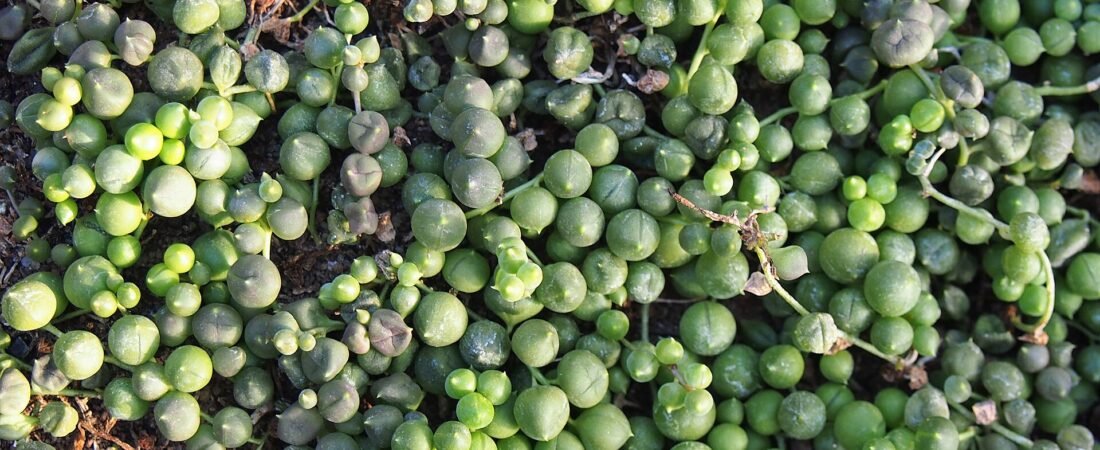
String of Pearls (Curio rowleyanus, sold for decades as Senecio rowleyanus) comes from the dry southwest of Africa, where it creeps along the ground under taller shrubs. Those “pearls” are modified leaves — water-storage tanks with a little translucent window on one side that lets light reach the chlorophyll inside. That’s why they’re round: minimum surface area, maximum water storage, in a climate that doesn’t rain often.
Two things follow from that origin story, and they explain nearly all its care:
- It’s a succulent. Not a tropical trailing plant, not a pothos, not an ivy.
- In the wild it grows along the soil, rooting as it goes — not dangling. Which means the stems are naturally rootable anywhere they touch dirt. Very handy later.
A few relatives you’ll see at the same shelf: String of Bananas (Curio radicans, faster and more forgiving — a great starter), String of Tears (pointier beads), and String of Dolphins (the leaping-dolphin hybrid). Care is essentially identical across all of them.
Heads up: String of Pearls is toxic to cats, dogs, and kids if eaten, and the sap can irritate skin. Hang it high or skip it if you’ve got a determined chewer.
Light
This is where most people lose the plant, and it happens slowly enough that you don’t notice.
String of Pearls wants bright light — the brightest indirect spot you have, plus some gentle direct sun. A few hours of morning sun from an east window is perfect. An unobstructed south or west window works too, though summer afternoon sun through glass can scorch the beads, so sheer-curtain it.
Signs the light is wrong:
- Long gaps between pearls, sparse stringy growth: not enough light. It’s stretching to find some. This won’t reverse — you’ll need to trim back and start fresh growth in a brighter spot.
- Beads shriveling with dry soil and pale/brown patches: too much harsh direct sun. Pull it back a foot or filter the window.
Here’s the catch with hanging it: the ceiling is darker than the windowsill. A macramé hanger by a north wall looks gorgeous and slowly starves the plant. If your only pretty spot is dim, add a small LED grow light on a timer — 10 to 12 hours a day makes a real difference in how tight and plump the growth stays.
Water
Water thoroughly, then let the soil dry out completely, then wait a few more days. In practice that lands around every 2–3 weeks in spring and summer, and every 4–6 weeks in winter — but check, don’t count.
The pearls themselves are the best gauge you’ll get:
- Firm, round, plump — happy, don’t water.
- Slightly softened or a little flat-sided — thirsty, water now.
- Deeply wrinkled, raisin-like — badly underwatered (or the roots have rotted and can’t drink; check the soil before you add more).
- Mushy, translucent, bursting, dropping off at a touch — overwatered. Stop immediately.
Water the soil, not the strings, and don’t let water pool in the crown where stems meet soil — that’s where rot starts. Bottom-watering works nicely here: set the pot in a shallow tray for 10–15 minutes, then drain it fully. And if you’re the type to second-guess yourself at the sink, a soil moisture meter ends the debate.
One more thing: this plant has a shallow, fine root system. It doesn’t need a deep drink of a huge pot — it needs a small pot that dries fast.
Soil
Fast-draining and gritty, always. A standard cactus and succulent soil mix is the easy answer, and it gets better with roughly a third perlite or pumice stirred in. What you’re after is a mix that feels loose and crumbly, not spongy.
The pot matters as much as the soil. Drainage hole, non-negotiable. Because the roots are shallow, a wide, shallow pot beats a deep one — deep soil below the roots just stays wet. A terracotta pot is our default, since the clay pulls moisture out through the walls and buys you a margin for error. If you’re set on a hanging display, a hanging planter with drainage and a saucer is worth hunting down over a sealed decorative one.
Fertilizer
Light feeder. A diluted succulent fertilizer at half strength, two or three times across spring and summer, is plenty. Skip fall and winter entirely.
Overfeeding produces soft, stretched growth that flops and rots more easily. When in doubt, feed less.
Temperature & Humidity
Comfortable in normal home conditions: 65–80°F in the growing season, and it appreciates a cooler winter rest around 55–60°F if you can offer it. Keep it above 50°F and away from frosty windowpanes.
Humidity is a non-issue — average household air is fine, and dry air is fine too. Do not mist it. Water sitting on the beads and stems invites rot, and this plant gets nothing from the humidity you’d give a Calathea.
Good airflow, on the other hand, genuinely helps. A stuffy corner keeps soil wet longer than it should be.
Repotting
Rarely, and reluctantly. Every 2–3 years is typical, and only when it’s clearly root-bound or the soil has broken down into something that stays soggy. String of Pearls actually does better slightly snug — a too-big pot holds too much water around those fine roots.
When you do repot:
- Go up one size only, and prioritize width over depth.
- Do it in spring, at the start of active growth.
- Let the soil dry out first — dry strings are less prone to snapping.
- Coil the trailing strands gently on top of the soil while you work, and don’t bury the crown.
- Wait about a week to water after repotting so any nicked roots can callus over.
Handle it as little as you can. The pearls detach easily, and every bead that pops off is one you won’t get back on that stem.
Propagation
Wonderfully easy, and it’s how you fix a thinning plant.
The layering method (our favorite): coil a healthy strand on top of the soil in the same pot — or a new one alongside — so several nodes touch the surface. Pin it down with a bent paperclip if it won’t stay put. Water lightly and wait. Within a few weeks those nodes root right where they sit, filling out the pot from the top instead of just dangling.
Cuttings: snip a 4–6″ strand, strip the pearls off the bottom inch to expose bare nodes, let it callus for a day, then lay it on damp gritty mix with those nodes in contact with the soil. Roots form at the leaf nodes, so surface contact matters more than burying it deep. A dip of rooting hormone speeds it up but isn’t required.
Water propagation works, though the roots it makes are water roots that struggle a bit in soil. We’d stick with soil.
Pro move: plant 5–8 cuttings in one pot at once. A single strand takes forever to look like anything; a cluster looks full in a season.
Common Problems
Mushy, translucent pearls that fall off. Overwatering, nearly every time. Stop watering, move it somewhere brighter and airier, and if the stems near the soil are soft, unpot it — trim off any rotted roots and stems, and replant the healthy strands into fresh dry gritty mix.
Shriveled, wrinkled pearls. Usually thirst, and it plumps back up within a day or two of a good soak. If it doesn’t, the roots are the problem, not the schedule — check for rot or a pot-bound root ball that water is running straight past.
Bare, leggy strings with big gaps. Not enough light. Trim the sparse strands (use those as cuttings!), move it brighter, and let it regrow tight.
Bald near the top, full at the ends. Normal aging plus the crown getting the least light. Layer some strands back over the soil surface to refill the middle.
Pests. Mealybugs love the crevices where pearls meet stem — look for white cottony specks. Dab them with a cotton swab dipped in rubbing alcohol, then treat with neem oil. Aphids show up on new growth occasionally and rinse off easily. Fungus gnats mean the soil is staying too wet — that’s a watering fix, not a bug fix.
Frequently Asked Questions
Why is my String of Pearls dying from the top down? Almost always crown rot from water pooling where the stems meet the soil. Water around the edge of the pot instead of the center, and make sure the plant isn’t sitting in a saucer of leftover water.
How fast does it grow? Slow to moderate — a few inches of new string per month during spring and summer, and basically nothing in winter. If yours hasn’t moved in months during the growing season, look at the light first.
Does it flower? It does, and it’s a lovely surprise — small white puffball blooms that smell faintly of cinnamon. A cool, dry winter rest makes flowering more likely.
Can I hang it in a bathroom? Only if that bathroom has a bright window. It doesn’t need the humidity, and a dim, damp room is the worst combination for it.
My cutting isn’t rooting. What’s wrong? Usually the nodes aren’t touching soil, or the soil is either bone dry or soaking wet. Keep it barely damp and press the strand into good contact.
Quick-Start Gear Checklist
- 🪴 Cactus & succulent soil + perlite
- 🏺 Shallow terracotta pot with drainage
- 💧 Soil moisture meter
- ☀️ LED grow light for dim corners
- 🌿 Succulent fertilizer
- ✂️ Small pruning snips for cuttings
- 🐛 Neem oil
Treat it like the desert succulent it is — bright light, a shallow gritty pot, and far less water than feels right — and String of Pearls will trail for years. And when a strand does snap off, don’t toss it. Lay it back on the soil and let it root. That’s the whole secret to a full one. Happy growing, from all of us at BloomBabe. 🌱