Disclosure: This post contains affiliate links. If you buy through them, BloomBabe may earn a small commission at no extra cost to you. As an Amazon Associate, I earn from qualifying purchases. We only recommend gear we’d use on our own plants.
If you’ve ever walked into an office lobby and thought what is that tall, striped, palm-looking thing that clearly nobody waters — that was a Dracaena. They’re the workhorses of the houseplant world: tolerant of low light, slow to complain, and happy to grow into a six-foot floor plant with almost no fuss.
They also have one very specific quirk that sends new plant parents spiraling: crispy brown leaf tips. Nine times out of ten it isn’t your watering schedule or your humidity. It’s your tap water. We’ll get into that below, because it’s the single most useful thing you can know about this plant.
Here’s everything else, in the order you’ll actually need it.
1. Meet the Dracaena
Dracaena is a big genus — the name comes from the Greek for “female dragon,” a nod to the red sap some species bleed. Most of what you’ll find at a garden center is one of these:
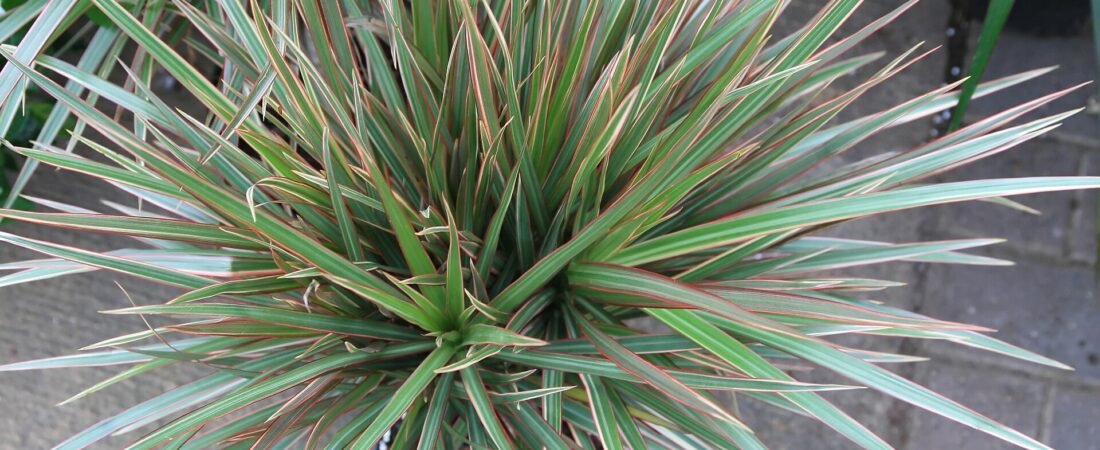
- Dracaena marginata (Madagascar Dragon Tree) — thin, arching, red-edged leaves on skinny gray canes. The most sculptural of the bunch.
- Dracaena fragrans (Corn Plant) — wide, glossy, corn-like leaves, often with a yellow-green stripe down the center. Usually sold as thick cut canes in a pot.
- Dracaena trifasciata — surprise: the Snake Plant was reclassified into this genus. It’s cared for completely differently, so follow our Snake Plant guide for that one.
- Dracaena sanderiana (“Lucky Bamboo”) — not bamboo at all, and usually grown in water.
- Dracaena reflexa (“Song of India”) — bushy, with creamy yellow leaf margins.
They all share the same basic personality: upright, slow-ish growing, forgiving of neglect, and sensitive to a few specific things in water. One important note before you buy — Dracaenas are toxic to cats and dogs. More on that in the FAQ.
2. Light
Dracaenas are famous as “low light plants,” which is half true and worth unpacking.
- Best growth: bright, indirect light — a few feet back from an east or north window, or filtered through a sheer curtain in a south-facing room.
- Tolerates: medium and genuinely dim spots. It will survive; it will just grow slowly and the variegation will fade toward plain green.
- Avoid: hours of hot, direct afternoon sun, which scorches pale bleached patches into the leaves.
The variegated types (Song of India, the yellow-striped Corn Plants) need noticeably more light than the plain green ones to keep their color. If your only open spot is a dark corner, a small LED grow light on a timer makes the difference between a plant that holds its stripes and one that slowly goes green.
Rotate the pot a quarter turn every couple of weeks. Dracaenas lean hard toward their light source, and a tall cane that’s been leaning for a year doesn’t straighten back out.
3. Water — and the Fluoride Problem
Let’s do the important part first.
Dracaenas are unusually sensitive to fluoride, and to a lesser extent chlorine and boron. These build up in the leaf tips over time and kill the tissue there, which is why so many otherwise-healthy Dracaenas have that signature band of brown at the very end of each leaf. Most municipal tap water is fluoridated. Once a tip browns it doesn’t heal — but you can stop new damage cold.
The fix is easy: use filtered, distilled, or collected rainwater. A basic water filter pitcher is enough for most people. Letting tap water sit out overnight helps with chlorine, but it does not remove fluoride — that’s a myth worth retiring.
Now the actual routine:
- Let the top 1–2 inches of soil dry out before watering again. In practice that’s usually every 1–2 weeks, and less in winter.
- Water thoroughly until it runs out the drainage hole, then empty the saucer. Never let the pot sit in standing water.
- Underwatering beats overwatering, every time. These are semi-succulent in habit and store water in their canes.
A soil moisture meter is genuinely useful here, because the deep pots these are usually sold in stay wet at the bottom long after the surface feels dry.
Reading your plant: yellowing lower leaves that drop are normal aging or overwatering. Soft, mushy cane at the base is root rot. Wrinkled canes and drooping, curling leaves mean thirsty.
4. Soil
Nothing exotic — Dracaenas want a well-draining, chunky mix that holds a little moisture without staying soggy.
A quality indoor potting mix amended with a couple of handfuls of perlite and some orchid bark is close to perfect. Roughly three parts potting mix to one part perlite to one part bark.
Two things to avoid: mixes heavy in peat that turn into a wet brick, and — importantly — superphosphate fertilizers and perlite-free mixes high in boron, both of which contribute to the same tip burn as fluoride. And always, always a pot with a drainage hole.
5. Fertilizer
Dracaenas are light feeders and are easy to over-fertilize. Salt buildup shows up as — you guessed it — brown tips and a crusty white film on the soil surface.
- Feed a balanced liquid houseplant fertilizer at half the label strength, once a month in spring and summer.
- Stop entirely in fall and winter.
- Once or twice a year, flush the pot: run water through it for a full minute in the sink or shower to rinse accumulated salts out the bottom.
Skip anything advertised as high-phosphate or “bloom booster.” This plant doesn’t need it and doesn’t like it.
6. Temperature & Humidity
Comfortable exactly where you are: 65–80°F. Keep them above 55°F, and away from cold drafts, entryways, and the blast of a heating vent. Sudden cold causes limp, dark, collapsed leaves overnight.
Humidity is a nice-to-have rather than a requirement. Average household humidity is fine; if your winter air drops very dry and you’re seeing browning along the leaf edges (not just the tips), a small cool mist humidifier nearby helps. Grouping plants together works too.
Wipe the leaves with a damp cloth every month or so. Those broad Corn Plant leaves are dust magnets, and dust genuinely reduces the light reaching them.
7. Repotting
Slow grower, relaxed schedule: every 2–3 years, in spring.
Signs it’s time: roots circling the surface or pushing out the drainage hole, water running straight through without soaking in, or growth that’s stalled for a full season in good conditions.
Go up just one pot size — an inch or two of extra diameter. Oversizing is the classic mistake here, because all that extra soil holds water the roots can’t reach, and you get rot. Loosen the root ball gently, set it at the same depth it was, and don’t fertilize for a month or two afterward.
8. Propagation
Dracaenas propagate beautifully from stem cuttings, and the process doubles as a way to fix a leggy plant.
- Take the cutting. With clean pruning shears, cut a section of cane 4–6 inches long. Note which end was “up” — cuttings won’t root upside down.
- Root it. Stand the cutting in water or moist mix. Rooting hormone on the cut end speeds things up. Roots typically appear in 3–6 weeks.
- Pot it up once roots hit about two inches.
Here’s the good news about the parent plant: cut the top off a bare, leggy cane and it will branch. New growth points sprout just below the cut, usually two or three of them, turning a single lonely stick into a fuller, bushier plant. Do it in spring, and keep watering the parent normally while it recovers.
9. Common Problems
- Brown, crispy leaf tips — fluoride or salt buildup, in that order of likelihood. Switch to filtered water, flush the soil, cut back on fertilizer. Trim the brown off with scissors, following the leaf’s natural point.
- Yellow lower leaves dropping — a few at a time is normal aging. Many at once, with wet soil, is overwatering.
- Pale, bleached patches — sunburn. Move it back from the window.
- Faded variegation, stretched growth — not enough light.
- Fine webbing between leaves — spider mites, which love the dry air Dracaenas often live in. Shower the plant off and treat with neem oil, repeating weekly for a month.
- White cottony spots in leaf joints — mealybugs. Dab each one with 70% isopropyl alcohol on a cotton swab, then treat with neem.
- Soft, dark, foul-smelling base — root rot. Unpot immediately, cut away every mushy root, and repot in fresh dry mix. If the cane itself is soft, take a cutting from the healthy top and start over.
Frequently Asked Questions
Are Dracaenas toxic to pets? Yes. They contain saponins, which cause vomiting, drooling, loss of appetite, and sometimes dilated pupils in cats. It’s rarely dangerous, but it’s genuinely unpleasant — if your cat chews everything, put this one on a high shelf or choose a different plant.
Why is my Dracaena dropping leaves after I brought it home? Almost always acclimation shock. A change in light, humidity, and handling makes them shed some lower leaves for a few weeks. Keep conditions stable, don’t repot right away, and don’t overwater it in a panic.
Can I cut my Dracaena shorter? Yes, and it’s the standard fix for one that’s gotten tall and bare. Cut the cane at whatever height you want, root the top as a cutting, and the stump will branch below the cut.
How fast do they grow? Slowly — a few inches a year indoors is typical. A tall floor Dracaena took years to get there, which is part of why they’re priced the way they are.
Do they flower indoors? Rarely, and mostly on mature Corn Plants. The blooms are small, white, and startlingly fragrant at night. It’s a fun surprise, not a goal.
Quick-Start Gear Checklist
- 💧 Water filter pitcher — the single best upgrade for this plant
- 📏 Soil moisture meter
- 🪴 Indoor potting mix + perlite
- 🏺 Pot with drainage
- 🌿 Balanced fertilizer
- ✂️ Pruning shears
- 🐛 Neem oil
Dracaenas ask for very little: decent light, filtered water, and the restraint to leave them alone between waterings. Get those three right and you’ll have a plant that quietly grows into a tree in the corner of your living room while you’re busy fussing over everything else. Happy growing, from all of us at BloomBabe. 🌿