Disclosure: This post contains affiliate links. If you buy through them, BloomBabe may earn a small commission at no extra cost to you. As an Amazon Associate, I earn from qualifying purchases. We only recommend gear we’d use on our own plants.
Most houseplants make you guess. The Peace Lily just… tells you. Forget a watering and it collapses into a theatrical, wilted heap across the side table — and then perks back up within hours of a drink, like nothing ever happened. It’s the most communicative plant we own, and that honesty is exactly why it’s such a good plant for someone who’s still learning to read a room full of leaves.
Add the fact that it blooms indoors in low light — genuinely rare — and you’ve got a plant that earns its spot. Here’s everything we’ve learned about keeping one glossy, green, and actually flowering.
1. Meet the Peace Lily
Peace Lily (Spathiphyllum species and hybrids) is a tropical evergreen from the rainforest floors of Central and South America and Southeast Asia. That origin story explains everything about its care: it grew up in warm, humid shade under a canopy, in soil that stayed damp but never swampy. Recreate that, and it’s happy.
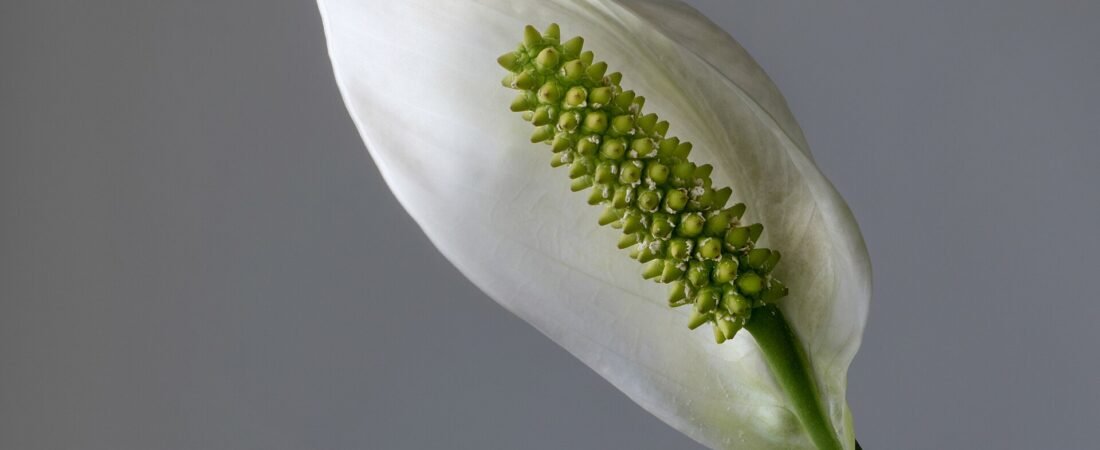
Botanically, it isn’t a lily at all — it’s an aroid, related to Monstera, Philodendron, and Anthurium. What everyone calls the “flower” is actually two parts: the spadix (the little textured spike, which holds the real flowers) and the spathe (the white hood behind it, which is a modified leaf).
Popular varieties worth knowing:
- ‘Mauna Loa’ — the classic mid-size grocery-store Peace Lily, about 2 feet tall.
- ‘Domino’ — speckled white variegation, a genuine showstopper.
- ‘Sensation’ — the giant, reaching 4–6 feet with huge ribbed leaves. Incredible floor plant.
- ‘Petite’ — compact and tidy, perfect for a desk or shelf.
2. Light Requirements
Peace Lilies have a reputation as “low-light plants,” and that’s half-true in a way that trips people up.
- Best growth and blooming: bright, indirect light — a few feet back from an east or north window is ideal.
- Tolerates: genuine low light and fluorescent office lighting. It will survive and stay green.
- Avoid: direct afternoon sun, which scorches those thin leaves into brown patches fast.
Here’s the honest version: low light keeps a Peace Lily alive, but bright indirect light is what makes it bloom. If yours has been leafy and flowerless for a year, light is almost always the reason. Move it somewhere brighter before you try anything else — or add a full-spectrum LED grow light if your space just doesn’t have a good window.
3. Watering Routine
This is the fun part, because your plant does the work of telling you.
Water thoroughly when the top inch or two of soil feels dry — pour until water runs freely from the drainage hole, then empty the saucer. Never let it sit in standing water.
In practice that’s usually once a week in spring and summer, and every 10–14 days in winter, but the exact number depends on your pot, light, and heating. A soil moisture meter takes the guesswork out entirely.
About the dramatic wilt: yes, the plant recovers beautifully. No, you shouldn’t use it as your watering schedule. Every full collapse stresses the root system a little, and repeated droughts show up later as brown leaf tips and fewer blooms. Treat the wilt as an apology mechanism, not a reminder system.
Peace Lilies are also sensitive to fluoride and chlorine in tap water — a common cause of brown tips. If your tap is heavily treated, let water sit out overnight, or use filtered or rainwater.
4. Ideal Soil Mix
You want a mix that holds moisture without turning into mud. A quality indoor potting mix lightened with a couple of handfuls of perlite hits the mark.
Our go-to blend:
- 3 parts indoor potting mix
- 1 part perlite (drainage and air)
- 1 part orchid bark or coco coir (structure and moisture retention)
Whatever you use, the pot must have a drainage hole. If you love a decorative cachepot, keep the plant in a plastic nursery pot inside it and lift it out to water.
5. Fertilizing
Peace Lilies are light feeders, and over-fertilizing is a genuine risk — it causes exactly the brown, crispy leaf tips people usually blame on humidity.
Feed with a balanced liquid houseplant fertilizer diluted to half strength, every 6–8 weeks during spring and summer only. Skip fall and winter completely.
If you’ve been feeding regularly and see white crust on the soil surface, flush the pot: run water through it in the sink for a minute or two to leach out built-up salts.
6. Temperature & Humidity
Rainforest plant, remember.
- Temperature: 65–80°F is the sweet spot. Below 55°F causes real damage — keep it away from drafty doors, single-pane windows in winter, and direct AC vents.
- Humidity: loves 50%+ and shows its appreciation with wider, glossier leaves.
Bathrooms and kitchens with a window are natural Peace Lily habitat. Everywhere else, a small cool mist humidifier or a pebble humidity tray makes a visible difference through dry winter months. Misting is pleasant but its effect lasts minutes — go with a humidifier if you can.
Wipe the leaves with a damp cloth every few weeks too. Dust genuinely blocks light on broad-leaved plants like this one, and clean leaves photosynthesize better.
7. Repotting
Repot every 1–2 years, ideally in spring, or whenever you see roots circling the surface or poking out the drainage hole. A plant that suddenly needs water every two days has usually outgrown its pot.
Go up just one pot size (about 2 inches wider). Too much extra soil holds water the roots can’t reach, and that’s how rot starts. A snug Peace Lily actually blooms more readily than an over-potted one.
To repot: water the day before, slide the plant out, gently tease apart circling roots, set it at the same depth in fresh mix, and water in well. Expect a week or two of sulking — that’s normal.
8. Propagation
Peace Lilies propagate by division, not by cuttings. A single leaf won’t root, so don’t waste one trying.
- Take the plant out of its pot and brush away loose soil until you can see the crowns — distinct clumps of leaves, each with its own roots.
- Separate a clump by hand where it comes apart naturally, or cut cleanly with a sterilized pruning shears. Each division needs at least 2–3 leaves and a healthy chunk of root.
- Pot each division into a small container with fresh mix, water well, and keep it warm and out of direct sun.
Divide in spring when the plant is actively growing, and it’ll re-establish in a month or so. It’s the cheapest way to fill a house — or hand a friend a plant with a story.
9. Common Problems
- Brown leaf tips: the classic Peace Lily complaint. Usually tap water chemicals, over-fertilizing, or dry air — in that order. Switch to filtered water and cut feeding in half first.
- Yellowing lower leaves: often just natural aging if it’s one or two at a time. Widespread yellowing with soggy soil means overwatering.
- Green flowers: blooms naturally fade from white to green as they age. Snip the stalk at the base once it does.
- No blooms: almost always insufficient light. Second most common cause: an oversized pot.
- Drooping with wet soil: this is the one to worry about. It signals root rot, not thirst. Unpot, trim any brown mushy roots, and repot in fresh mix.
- Pests: mealybugs, aphids, and spider mites turn up occasionally. Wipe them off and treat with neem oil or insecticidal soap.
Frequently Asked Questions
Is a Peace Lily toxic to pets? Yes. Like most aroids, it contains insoluble calcium oxalate crystals that cause mouth irritation, drooling, and vomiting if chewed by cats or dogs. It’s not the deadly true lily that endangers cats’ kidneys, but keep it out of reach and call your vet if your pet takes a bite.
Why won’t my Peace Lily flower? Light, nine times out of ten. Move it to bright indirect light and give it a season. Also check that it isn’t swimming in an oversized pot — and know that grocery-store plants are often chemically induced to bloom, so a first-year gap after purchase is completely normal.
Do Peace Lilies really purify the air? They appeared in NASA’s well-known clean-air study and do absorb certain compounds in sealed lab conditions. In a real, ventilated room the effect is modest — enjoy it as a bonus, not a reason to skip opening a window.
Should I cut off the brown tips? You can, cosmetically. Trim with clean scissors following the leaf’s natural shape and leave a thin margin of brown — cutting into green tissue just creates a new brown edge. Better to fix the underlying cause.
Can it live in water? Yes, semi-hydroponically or in a vase with the roots submerged and the crown above water. Rinse and refill weekly and add heavily diluted fertilizer, since there’s no soil to feed from.
Quick-Start Gear Checklist
- 💧 Soil moisture meter
- 🪴 Indoor potting mix + perlite
- 🏺 Planter with drainage hole
- 🌿 Balanced liquid fertilizer
- 💨 Cool mist humidifier
- ✂️ Pruning shears
- 🐛 Neem oil
Give a Peace Lily bright indirect light, water it before it faints, and keep it out of the cold — that’s genuinely the whole job. In return you get deep glossy green all year and those elegant white spathes appearing when most other plants have given up on your dim living room. It’s a forgiving plant with excellent manners, and it will tell you the moment something’s off. Happy growing, from all of us at BloomBabe. 🌱