Disclosure: This post contains affiliate links. If you buy through them, BloomBabe may earn a small commission at no extra cost to you. As an Amazon Associate, I earn from qualifying purchases. We only recommend gear we’d use on our own plants.
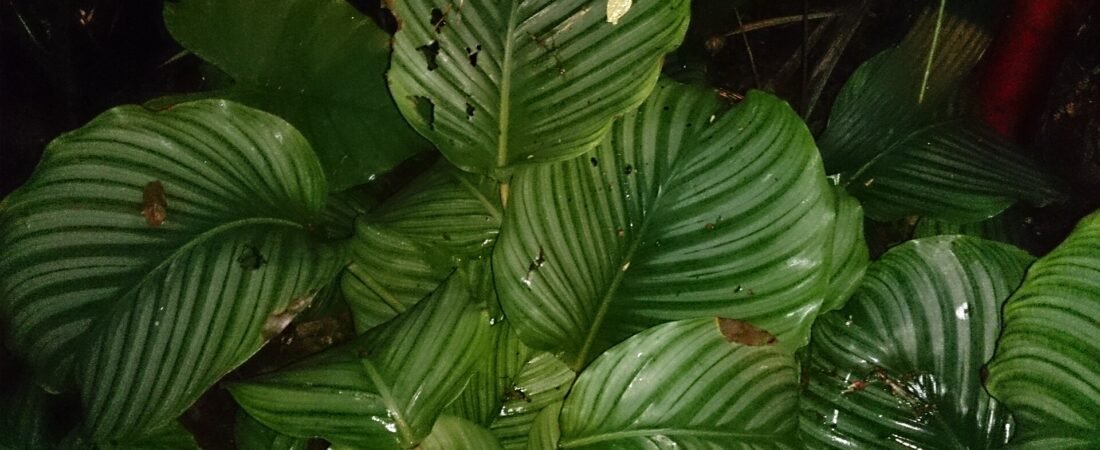
Nothing in the houseplant world looks quite like a Calathea. Brushstroke stripes, deep purple undersides, leaves that lift at night and unfurl again by morning — it’s the plant that makes people stop mid-conversation and ask what it is.
It’s also the plant with a reputation. “Drama queen.” “Crispy tip magnet.” Some of that is deserved, most of it comes down to three things people get wrong: water quality, humidity, and light. Get those right and Calathea is genuinely rewarding — it will push new leaves all season and reward you with the best foliage in the room. Here’s the honest, no-fluff version of how to do it.
1. Meet the Calathea
Calathea belongs to the Marantaceae family — the prayer plants — named for the nightly leaf movement called nyctinasty. Leaves fold upward at dusk and relax open at dawn, powered by a small hinge of cells at the base of each leaf stem. It’s genuinely one of the most charming things a houseplant does.
A note on names: botanists recently reclassified many popular Calatheas into the genus Goeppertia. Your plant tag may say either. Nothing about the care changed.
Varieties worth knowing:
- Calathea orbifolia — huge, round, silver-and-green striped leaves. The showstopper, and the thirstiest for humidity.
- Calathea lancifolia (Rattlesnake Plant) — wavy, elongated leaves with dark spotting and deep burgundy undersides. One of the more forgiving picks.
- Calathea makoyana (Peacock Plant) — fine, translucent feathering, almost like stained glass.
- Calathea ornata (Pinstripe) — dark leaves with candy-pink pinstripes. Beautiful, and prone to crisping if you slack on humidity.
- Calathea roseopicta ‘Medallion’ — broad oval leaves with a pale center ring and purple reverse. A great starter Calathea.
If this is your first, start with a Rattlesnake or a Medallion. Save Orbifolia for after you’ve built the routine.
2. Light Requirements
Calatheas grow on the forest floor under a canopy, and their care should mirror that.
- Ideal: bright, indirect light — a few feet back from an east or north window, or filtered through a sheer curtain.
- Tolerates: medium light, with slower growth and slightly less vivid patterning.
- Avoid: direct sun. Even an hour of midday sun through glass will bleach the pattern and scorch pale sections of leaf.
Faded, washed-out markings usually mean too much light. Leggy stems reaching sideways with small new leaves mean too little. If your best spot is dim, a soft LED grow light on a timer, kept well back from the foliage, keeps the color rich without burning it.
3. Watering (and the Water Quality Problem)
This is where most Calatheas are lost — and it’s rarely about how much.
Keep the soil lightly and evenly moist. Not soggy, never bone dry. Water when the top inch feels barely dry to the touch, then water thoroughly until it runs out the drainage holes. Empty the saucer; standing water rots the shallow root system fast.
Here’s the part nobody tells you at the garden center: Calatheas are sensitive to the minerals and chlorine in tap water. Hard water, softened water, and heavily chlorinated water all cause the classic brown crispy edges people blame on humidity. If your tap is hard, switch to distilled water, collected rainwater, or filtered water from a water filter pitcher. Letting tap water sit out overnight helps with chlorine but does nothing for dissolved minerals.
Use room-temperature water — cold water straight from the tap shocks the roots. A soil moisture meter is genuinely useful here, because “evenly moist” is a narrower target than “bone dry between waterings,” and dense Calathea foliage hides the soil surface.
In winter, growth slows and so should you — the soil dries more slowly, so check before every watering rather than watering on a schedule.
4. Ideal Soil Mix
Calatheas want a mix that holds moisture but still breathes. Straight dense potting soil compacts and suffocates the fine roots; pure chunky aroid mix dries out too fast.
The sweet spot is roughly:
- 2 parts quality indoor potting mix
- 1 part coco coir or peat, for even moisture retention
- 1 part perlite, for aeration
Plant in a pot with drainage — always. Unlike Snake Plants, Calatheas do better in a plastic or glazed ceramic pot than in terracotta, because terracotta wicks moisture away faster than these roots like.
5. Fertilizing
Calatheas are light feeders and salt-sensitive — the same mineral buildup that browns the leaf edges comes from over-fertilizing.
Feed with a balanced liquid houseplant fertilizer diluted to half strength, once a month through spring and summer only. Skip fall and winter entirely.
Once or twice a year, flush the pot: run water through the soil for a full minute in the sink or shower to wash accumulated salts out the bottom. Ten minutes of maintenance that prevents months of crispy edges.
6. Temperature & Humidity
Temperature: 65–80°F is the happy zone. Below 60°F, growth stalls and leaves can droop or discolor. Keep Calatheas away from drafty doors, single-pane winter windows, air conditioning vents, and heating registers — sudden temperature swings and blasts of dry air are as damaging as neglect.
Humidity is non-negotiable. Calatheas want 50–60% or higher. Most heated homes run 25–35% in winter, which is exactly why so many people watch their pinstripes crisp from December onward.
What actually works:
- A cool mist humidifier running near the plant. This is the single most effective fix, full stop.
- Grouping plants together so they share transpired moisture.
- A pebble tray with water beneath the pot (the pot sits on the pebbles, not in the water).
- A bright bathroom or kitchen, where ambient humidity is naturally higher.
Misting? Honest answer: it raises humidity for a few minutes, then it’s gone, and water sitting on the leaves overnight can invite fungal spotting. A hygrometer costs very little and tells you what your room is actually doing instead of guessing.
7. Repotting
Repot every 1–2 years in spring, or when roots emerge from the drainage holes and the soil dries out unusually fast.
Go up only one pot size — an oversized pot holds wet soil away from the roots and leads to rot. Handle the root ball gently; Calathea roots are fine and break easily. Expect a week or two of sulking afterward. That’s normal, not a crisis.
8. Propagation
Calatheas do not root from stem or leaf cuttings. There’s no water-propagation shortcut here. The only method is division:
- Repot in spring, when the plant is actively growing and has multiple clumps.
- Slide it out and gently tease the root ball apart into sections, each with several leaves and its own healthy roots.
- Pot each division in fresh mix, water lightly, and keep humidity high for the first few weeks while it settles.
Don’t divide a stressed or newly purchased plant — wait until it’s established and thriving.
9. Common Problems
- Crispy brown edges and tips. The classic. In order of likelihood: low humidity, mineral or chlorine buildup from tap water, or fertilizer salts. Switch to filtered or distilled water, add a humidifier, flush the soil.
- Yellowing lower leaves. Usually overwatering or a pot that stays soggy. Check that drainage hole. A leaf or two yellowing with age is normal.
- Curling leaves that stay curled during the day. Underwatering or very dry air. Leaves curling at night is just the prayer response — that one’s a feature.
- Faded, bleached patterning. Too much direct light. Move it back from the window.
- Drooping. Both too dry and too wet look similar; feel the soil before acting.
- Spider mites. Dry air invites them. Look for fine webbing and stippled leaves, rinse the foliage, and treat with neem oil or insecticidal soap. Raising humidity is both cure and prevention.
Frequently Asked Questions
Are Calatheas toxic to pets? No — Calatheas are non-toxic to cats and dogs, which makes them one of the safest statement plants for a pet household.
Why does my Calathea move its leaves at night? That’s nyctinasty, the prayer-plant response. Leaves fold upward at dusk and open by morning. A plant that stops moving is usually telling you it’s stressed or getting too little light.
Can I cut off the brown tips? Yes. Trim with clean pruning shears, following the natural leaf shape so the cut looks intentional. Fix the underlying cause first, or you’ll be trimming forever.
Is Calathea a good beginner plant? It’s an intermediate plant with beginner-friendly variations. Rattlesnake and Medallion are quite manageable; Orbifolia and Ornata want a genuinely humid room.
Why won’t my cutting root? Because it can’t. Calatheas only propagate by division.
Quick-Start Gear Checklist
- 💧 Soil moisture meter
- 🌫️ Cool mist humidifier + hygrometer
- 🪴 Indoor potting mix + coco coir + perlite
- 🏺 Ceramic planter with drainage
- 🌿 Balanced liquid fertilizer
- ✂️ Pruning shears
- 🐛 Neem oil
Calatheas aren’t difficult so much as specific. Filtered water, a humidifier, and gentle indirect light cover about ninety percent of what they’re asking for — and once that routine is in place, they stop being fussy and start being the most beautiful thing on your shelf. Happy growing, from all of us at BloomBabe. 🌱