Disclosure: This post contains affiliate links. If you buy through them, BloomBabe may earn a small commission at no extra cost to you. As an Amazon Associate, I earn from qualifying purchases. We only recommend gear we’d use on our own plants.
Ficus has a reputation. Ask around and someone will tell you they bought a beautiful tree, brought it home, and watched it drop half its leaves on the living room floor within two weeks. That story is so common it’s practically a genre.
Here’s the thing: ficus aren’t difficult. They’re particular. They want the same spot, the same rhythm, and the same conditions week after week, and they tell you loudly when something changes. Once you understand that one trait, the whole genus gets a lot easier — and you get one of the best-looking trees you can grow indoors.
Meet the Ficus Family
Ficus is a huge genus (over 800 species), but only a handful show up at garden centers. Knowing which one you have matters, because their needs differ more than the shared name suggests.
- Rubber Plant (Ficus elastica) — thick, glossy, burgundy-or-green paddle leaves. The most forgiving of the bunch and the best starting point. We have a full Rubber Plant Care 101 guide if that’s what you brought home.
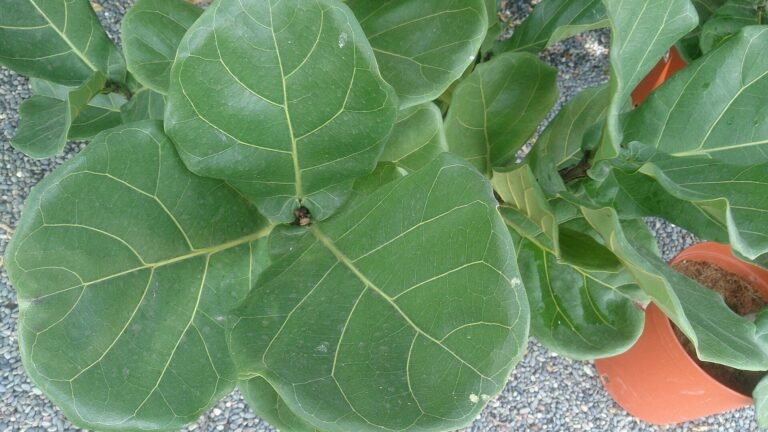
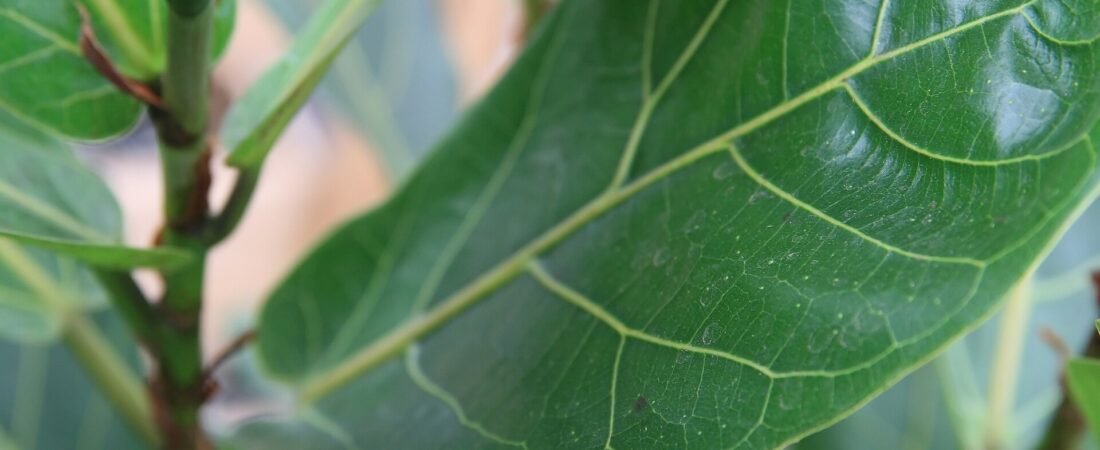
- Fiddle Leaf Fig (Ficus lyrata) — the famous one, with huge violin-shaped leaves. Gorgeous, dramatic, and the fussiest about light. Full guide here: Fiddle Leaf Fig Care 101.
- Weeping Fig (Ficus benjamina) — small pointed leaves on arching branches, often sold braided. The champion leaf-dropper. Also the toughest long-term once it settles.
- Ficus Audrey (Ficus benghalensis) — soft, matte, oval leaves with pale veins. Increasingly popular as a lower-drama alternative to the fiddle leaf, and honestly, it deserves the hype.
- Ginseng Ficus (Ficus microcarpa) — the bonsai-style one with a fat, sculptural trunk. Sold as a beginner bonsai; grown indoors year-round in most homes.
- Creeping Fig (Ficus pumila) — a tiny-leafed vine, not a tree. Great in a terrarium or trailing off a shelf.
Everything below applies to the whole family, with notes where a particular species is pickier.
Light: More Than You Think
Ficus are tropical trees. In the wild they’re reaching for the canopy, not sitting in a hallway. Indoors, that translates to bright, indirect light for at least six hours a day.
- Best: a few feet back from a south or west window, or directly in an east window.
- Tolerated: bright north light, though growth slows and variegated types fade.
- Avoid: dim corners. This is the single most common reason a ficus declines slowly over months.
Variegated cultivars — Tineke, Ruby, Ficus Triangularis Variegata — need more light than their solid-green cousins, because the white parts of the leaf don’t photosynthesize. If the new leaves are coming in mostly green, it’s asking for a brighter spot.
If your place genuinely doesn’t have a bright window, this is a plant worth supplementing. A full-spectrum LED grow light on a timer, 10–12 hours a day, makes the difference between a tree that holds its shape and one that gets leggy and bare at the bottom.
One more thing: rotate the pot a quarter turn every couple of weeks. Ficus lean hard toward light, and a tree that grows crooked for a year can’t be straightened later.
Water: Consistency Over Schedules
Ficus want evenly moist soil that dries partway down between waterings — never soggy, never bone dry for long.
The method: push a finger (or a soil moisture meter) about two inches into the soil. Dry at that depth? Water. Still damp? Wait a few days and check again.
When you do water, water thoroughly — until it runs freely out the drainage hole — then empty the saucer. Half-watering a big tree only wets the top few inches and leaves the deep roots dry, which is how you end up with a plant that’s simultaneously overwatered and thirsty.
In practice that’s roughly every 7–10 days in spring and summer, and every 2–3 weeks in winter. But treat those as rough expectations, not rules. A tree in a bright window in July drinks far faster than the same tree in January.
Ficus are also mildly sensitive to fluoride and chlorine, which show up as brown leaf tips. If your tap water is heavily treated, letting it sit out overnight or using filtered water helps.
Soil and Potting
Ficus need a mix that drains fast but still holds some moisture. A quality indoor potting soil amended with a couple of big handfuls of perlite and some orchid bark hits the mark — roughly 3 parts soil, 1 part perlite, 1 part bark.
Drainage hole, always. No exceptions, no gravel layer at the bottom (it doesn’t work). If you love a decorative pot without a hole, use it as a cachepot and keep the plant in a plastic nursery pot inside it.
Size matters too. Ficus prefer to be a little snug. A tree swimming in an oversized pot sits in wet soil for weeks, and root rot follows.
Fertilizer
Ficus are trees — they’re hungrier than your average pothos, especially once they’re actively pushing new growth.
Feed with a diluted balanced houseplant fertilizer every 3–4 weeks from spring through early fall. Skip fall and winter entirely; a resting plant can’t use the nutrients and the salts just build up in the soil.
Once a year, flush the pot: run water through it for a full minute or two in a sink or shower to wash out accumulated fertilizer salts. Crispy leaf edges on a well-watered plant are often salt buildup, not underwatering.
Temperature and Humidity
Keep them between 60–80°F, and away from anything that blows. Heating vents, air conditioners, and drafty entryways are the classic causes of sudden leaf drop. Below 55°F they start to suffer.
Humidity around 40–50% is ideal. Most homes sit lower than that in winter, and while ficus tolerate average household air better than a calathea does, they’re happier with help. A small cool mist humidifier nearby beats misting, which evaporates in minutes and does very little.
Wipe the leaves. Big glossy foliage collects dust fast, and dust genuinely blocks light. A damp microfiber cloth every few weeks keeps them shining and lets you catch pests early.
Repotting
Repot every 2–3 years, in spring, and only when the plant is genuinely rootbound — roots circling the pot, poking from the drainage hole, or water running straight through.
Go up just one size (about 2 inches wider). Loosen the outer roots gently, set the tree at the same depth it was before, and backfill with fresh mix. Expect a little sulking for a few weeks afterward; that’s normal.
For a large tree you don’t want to size up any further, top-dress instead: scrape off the top 2 inches of old soil and replace it with fresh.
Propagation
Ficus root readily from stem cuttings, which makes pruning feel much less wasteful.
- In spring or summer, cut a 6-inch tip with 3–4 leaves, just below a node, using clean pruning shears.
- All ficus bleed a milky white sap. It’s a skin irritant and toxic if eaten — wear gloves, and rinse the cut end under water until the sap stops.
- Remove the lowest leaves, dip the cut end in rooting hormone, and plant in moist mix or set in water.
- Keep it warm, bright, and humid. Roots take 4–8 weeks. A clear bag over the pot creates a simple humidity tent.
For thick-stemmed types like rubber plants and fiddle leaf figs, air layering has a much higher success rate than cuttings and gives you a big, established plant instead of a twig.
Common Problems
Leaf drop after moving the plant. Almost always shock, not disease. The plant is recalibrating to new light. Put it in its permanent spot, water normally, and don’t start changing things to fix it — that’s what makes it worse. It should stabilize in 2–4 weeks.
Yellow leaves, lower ones first. Usually overwatering. Check that the soil isn’t staying soggy and that the pot actually drains.
Brown, crispy edges. Dry air, salt buildup, or inconsistent watering. Flush the pot, then water more evenly.
Brown spots in the middle of the leaf. On fiddle leaf figs especially, dark spots spreading from the center often mean root rot. Unpot and check for black, mushy roots.
Sudden sticky residue and tiny bumps. Scale insects — ficus magnets. Scrape them off with a fingernail or an alcohol-dipped cotton swab, then treat with neem oil every week for a month. Spider mites show up in dry winter air; look for fine webbing where the leaf meets the stem.
Leggy growth with bare lower stems. Not enough light. Move it brighter, and prune the top to force branching lower down.
Frequently Asked Questions
Why does my ficus drop leaves every time I move it? Ficus form their leaves for a specific light level and can’t adjust them once grown, so a change in position means shedding and regrowing. Pick a spot and commit to it.
Are ficus toxic to pets? Yes. The milky sap irritates skin and mouths and causes vomiting if chewed. Keep them out of reach of cats and dogs.
How do I make my ficus branch out instead of growing straight up? Prune the growing tip in spring. That removes the hormone suppressing side buds, and the plant responds by pushing 2–3 new branches below the cut.
Can a ficus live outside in summer? Yes, in shade or dappled light, once nights stay above 60°F — but acclimate it over a week or two, and expect leaf drop when it comes back in.
My tree hasn’t grown all winter. Is it dying? Probably not. Short days mean dormancy. Ease off water, stop fertilizing, and wait for spring.
Quick-Start Gear Checklist
- 💧 Soil moisture meter
- 🪴 Indoor potting soil + perlite + orchid bark
- 🌿 Balanced houseplant fertilizer
- ☀️ Full-spectrum grow light
- 💨 Cool mist humidifier
- ✂️ Pruning shears + rooting hormone
- 🐛 Neem oil
- 🧤 Gardening gloves for the sap
Find your ficus a bright spot, water it on the same rhythm, and then mostly leave it alone. That’s the whole secret. The leaves it drops in the first month are the price of admission — after that, you’ve got a tree that gets better every single year. Happy growing, from all of us at BloomBabe. 🌱