Disclosure: This post contains affiliate links. If you buy through them, BloomBabe may earn a small commission at no extra cost to you. As an Amazon Associate, I earn from qualifying purchases. We only recommend gear we’d use on our own plants.
Nothing turns a patio or a sunny living room corner into a jungle faster than a Colocasia. The leaves get enormous — two feet across on a happy plant — and they come in colors that don’t look real: inky black-purple, green splashed like someone spilled ink on it.
Here’s the thing most care guides bury: Colocasia is a bog plant. It grows wild at the edges of ponds and flooded rice paddies. Almost every rule you’ve learned about houseplants — let the top inch dry out, never leave it sitting in water — gets loosened or thrown out here. Once that clicks, this plant goes from “mine keeps crisping up” to “I can’t believe how fast it grows.”
Meet the Colocasia
Colocasia esculenta is the plant behind taro, cultivated for its starchy corm across the Pacific, Southeast Asia, Africa, and the Caribbean for thousands of years. The ornamental cultivars we grow for those ridiculous leaves are the same species, bred for drama instead of dinner.
You’ll hear three plants called “elephant ear,” and telling them apart genuinely changes how you water:
- Colocasia — leaves point down, held like a drooping heart or a shield. Thirsty, sun-loving, bog-dwelling. This guide.
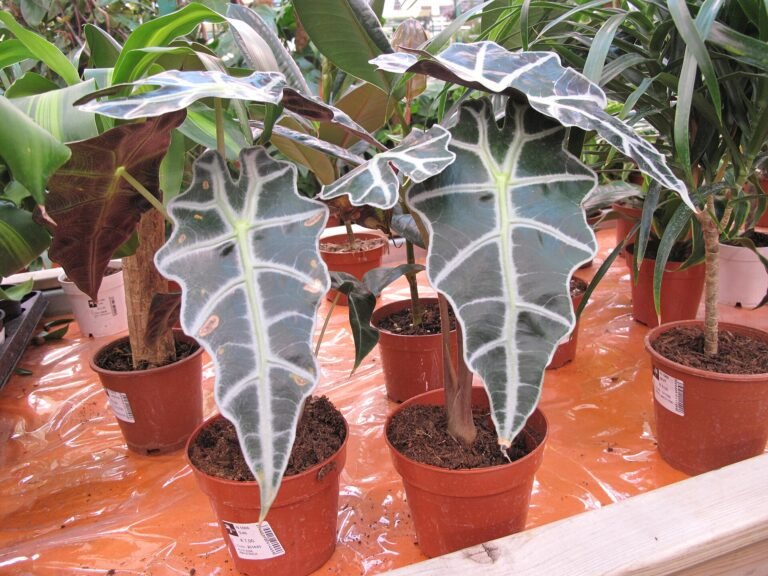
- Alocasia — leaves point up and out, stiff and arrow-shaped. Wants moist-but-drained soil and indirect light. Very different plant. (See our Alocasia guide.)
- Xanthosoma — arrow-shaped too, but with a distinct rim vein running around the leaf edge.
The rule of thumb plant people use: Colocasia cries, Alocasia flies. Leaf tips down versus leaf tips up.
Varieties worth hunting for:
- ‘Black Magic’ — matte, dusty purple-black. The classic.
- ‘Illustris’ — velvety near-black leaves with bright green veins, like stained glass.
- ‘Mojito’ — green splattered with black flecks, no two leaves alike.
- ‘Coffee Cups’ — leaves cup upward, hold rainwater, then tip and pour it out.
- ‘Pink China’ — the toughest of the bunch, pink stems, survives colder winters.
Light
Colocasia wants more light than you’d guess for something with tropical leaves that big.
- Ideal indoors: the brightest window you own — south or west facing — with a few hours of gentle direct sun.
- Outdoors: full sun to part shade, as long as the water keeps up. In full sun with dry roots, it scorches fast.
- Dark cultivars need the most: ‘Black Magic’ and ‘Illustris’ fade to muddy green in low light. That deep color is sun-driven.
Too little light shows up as long, floppy, stretched-out stems with undersized leaves. If your brightest window is still dim — north-facing, a shaded courtyard, a basement apartment — supplement with a full-spectrum LED grow light running 10 to 12 hours a day.
Water
This is where Colocasia breaks the rules, so read this part twice.
Never let it dry out. Not “let the top two inches dry” — never. Consistently damp to genuinely wet soil is the target, and this is one of the very few houseplants where leaving it standing in a saucer of water is fine, even good.
- Growing season: check daily in summer. A large plant in a warm room can drink through a pot in a single day.
- Use a deep saucer or cachepot and keep water in it. Refresh it every few days so it doesn’t stagnate.
- A self-watering planter takes most of the work out of this — the reservoir does exactly what this plant wants.
- Winter: back off substantially. Cold and wet together rot the corm, which is the one way to actually kill a Colocasia.
Signs you’re reading right: droopy leaves that perk back up within hours of a good soak mean it got too dry. Crispy brown edges mean it’s been drying out repeatedly. A soil moisture meter is genuinely useful here, because a big pot can feel damp on top while the root ball has gone dry underneath.
Soil
Skip the gritty, fast-draining mixes. Colocasia wants soil that holds moisture: rich, heavy, organic.
A mix that works well:
- 2 parts quality indoor potting soil
- 1 part compost or worm castings for richness
- A small handful of perlite — just enough that the mix doesn’t compact into concrete
Still use a pot with a drainage hole, and let the saucer do the water-holding. A large plastic or glazed ceramic planter beats terracotta here — terracotta wicks moisture away, exactly the wrong direction for this plant.
Fertilizer
Colocasia is a heavy feeder. Those leaves cost a lot to build, and underfeeding is the most common reason someone’s elephant ear stays small.
- Spring through early fall: feed every 2 weeks with a balanced liquid houseplant fertilizer at label strength, or weekly at half strength.
- Nitrogen drives leaf size — a formula with a higher first number suits a foliage plant like this.
- Stop feeding in late fall as growth slows. Feeding a dormant plant just builds up salts.
Every couple of months, flush the pot with plain water until it runs freely from the drainage hole. Constant feeding plus constant moisture accumulates mineral salts, and that shows up as brown leaf margins.
Temperature & Humidity
Tropical, and it means it.
- Temperature: 65–85°F is the happy zone. Growth slows noticeably below 60°F, and below 50°F the plant starts shutting down.
- Humidity: 60% and up is ideal. In dry indoor air the leaf edges crisp and spider mites move in.
- Keep it away from heating vents, AC blasts, and drafty winter windows.
If your home runs dry — most do in winter — a cool-mist humidifier near the plant does more good than misting ever will.
Repotting
Colocasia grows fast enough that it usually needs repotting every spring, sometimes twice in one season for a vigorous plant.
Repot when roots circle the bottom, when the plant dries out alarmingly fast, or when new leaves come in smaller than the last set. Go up one to two pot sizes — this plant genuinely benefits from room, unlike most houseplants — and set the corm at the same depth it was growing before. Spring, right as new growth starts, is the moment; repotting a dormant corm in midwinter is asking for rot.
Propagation
Corm division is the main method. In spring, tip the plant out and look at the base. You’ll find small offset corms — little brown, hairy bulbs — attached to the parent or sitting loose in the soil. Twist or cut them off with a clean pair of pruning snips, making sure each piece has a growth point (a small pale bud). Pot them shallowly in damp mix, keep them warm, and be patient — sprouting takes two to six weeks.
Runners: some varieties, ‘Pink China’ especially, send out stolons that surface and root themselves nearby. Sever the runner once the new plant has its own roots.
Common Problems
- Crispy brown edges: the classic Colocasia complaint, and almost always dryness — dry soil, dry air, or both. Occasionally fertilizer salt buildup; flush the pot to rule that out.
- Yellowing lowest leaf: normal. Colocasia constantly retires old leaves to fund new ones. Trim it off at the base. Yellowing on several leaves at once is different — check for a cold, soggy root zone.
- Drooping: thirst nine times out of ten. Soak thoroughly and check again in a few hours.
- Faded color on dark varieties: not enough light. Move it brighter.
- Spider mites: the number-one pest indoors, drawn to dry air. Look for fine webbing where leaf meets stem and a stippled, dusty look on the leaf surface. Shower the plant off, then treat with neem oil or insecticidal soap, repeating weekly for three weeks to break the life cycle.
- Mushy corm, no new growth: rot from cold plus wet. Unpot it, cut away every soft part until you hit firm white tissue, let the cut surfaces dry a day, and repot in fresh mix somewhere warm.
What About Winter Dormancy?
This trips up nearly everyone. As days shorten, a Colocasia often drops every leaf and looks completely dead. The corm is alive underground. You have two options:
Let it sleep. Cut the foliage back, move the pot somewhere cool (around 50–60°F) and dim, and water just enough that the soil never becomes bone dry — maybe once a month. In spring, bring it back to warmth and light, resume watering, and it’ll push new leaves within a few weeks.
Keep it awake. With enough warmth and a grow light running 12 hours a day, many Colocasia stay in leaf all year indoors. Growth slows, but it never fully quits.
Either approach works. What doesn’t is the middle ground: a cold room and wet soil. That’s the rot scenario.
Frequently Asked Questions
Is Colocasia toxic to pets? Yes. All parts contain calcium oxalate crystals, which cause intense mouth burning, drooling, and swelling if chewed. Keep it away from cats, dogs, and small kids.
Wait, isn’t this taro? Can I eat it? Colocasia esculenta is taro, and it’s a staple food across much of the world — but only after long cooking, which breaks down those oxalate crystals. Raw taro is genuinely harmful. And ornamental cultivars like ‘Black Magic’ aren’t grown or handled as food crops. Admire this one, don’t eat it.
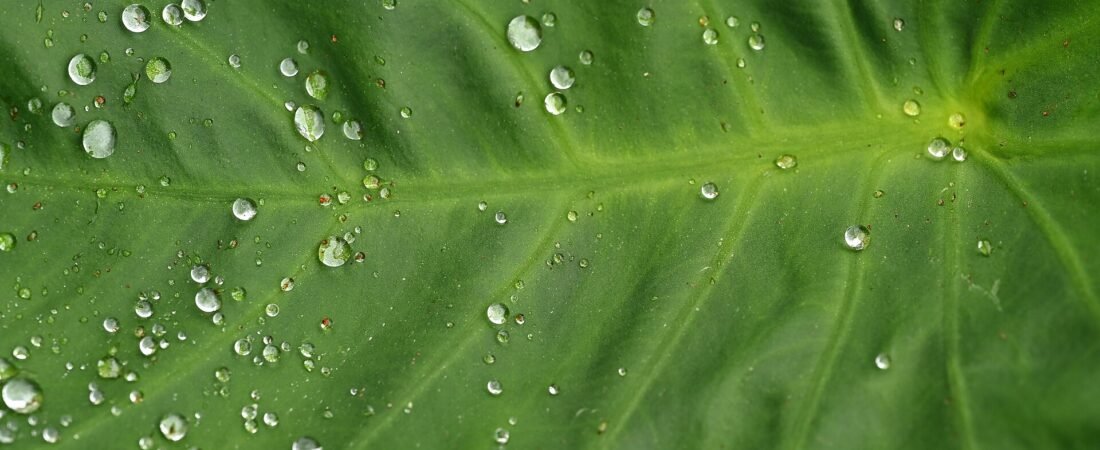
Why are the leaves dripping water? Guttation — a healthy, well-watered plant releasing excess moisture. Nothing to fix.
How big will it get indoors? In a big pot with strong light and steady feeding, expect three to five feet tall with leaves 12 to 24 inches across. Outdoors in summer heat, considerably bigger.
Can I move it outside for summer? Absolutely, and it’ll reward you for it. Acclimate over a week or two so the leaves don’t scorch, keep it very well watered, and bring it back in before nights drop below 50°F.
How is this different from Alocasia? Leaf direction is the quick tell — Colocasia points down, Alocasia points up. The care difference matters more: Colocasia wants sun and constantly wet soil, Alocasia wants indirect light and evenly moist, well-drained soil.
Quick-Start Gear Checklist
- 💧 Soil moisture meter
- 🪴 Large pot with drainage + a deep saucer
- 🌱 Rich potting soil and worm castings
- 🌿 Balanced liquid fertilizer
- 💡 Full-spectrum grow light
- 💨 Humidifier
- ✂️ Pruning snips
- 🐛 Neem oil
Give a Colocasia sun, all the water it asks for, and more fertilizer than feels reasonable, and it will hand you the biggest leaves in your house. It’s a plant that rewards generosity — which honestly makes it a nice change from the ones that punish you for caring too much. Happy growing, from all of us at BloomBabe. 🌱