Disclosure: This post contains affiliate links. If you buy through them, BloomBabe may earn a small commission at no extra cost to you. As an Amazon Associate, I earn from qualifying purchases. We only recommend gear we’d use on our own plants.
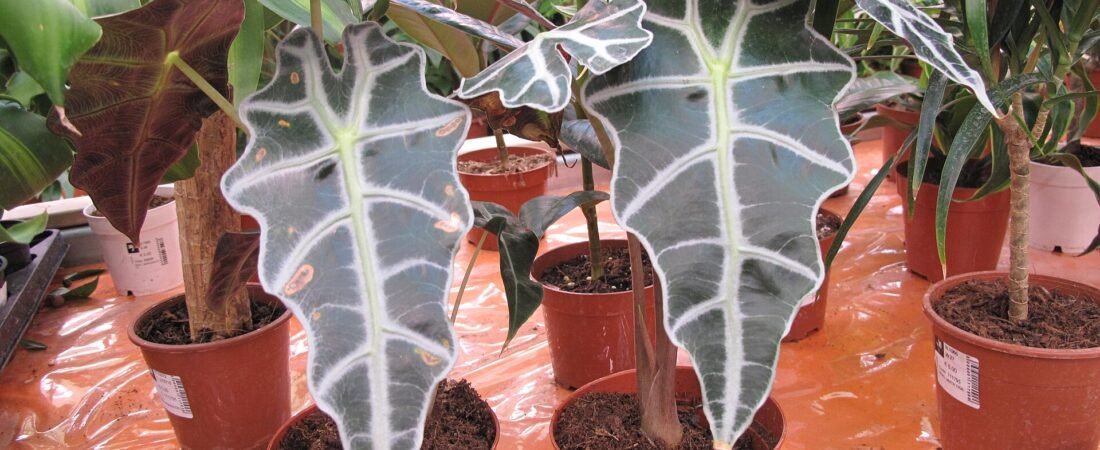
Alocasia Polly is the plant that makes people stop mid-conversation and ask what it is. Those arrow-shaped leaves with their bright white veins and scalloped, almost wavy edges look hand-drawn. She’s also the plant most likely to drop every leaf two weeks after you bring her home, which is why so many people decide they “can’t grow Alocasia.”
Here’s the thing: Polly isn’t difficult so much as she’s dramatic. She tells you loudly when something’s off, and she has a dormancy habit that fools people into throwing out a perfectly healthy plant. Once you understand those two quirks, she’s genuinely manageable — even in a normal apartment without a grow tent.
This guide is Polly-specific. If you’re caring for a big Alocasia like a Frydek, Zebrina, or Odora, our general Alocasia Care 101 covers those; this one is about the compact hybrid and her particular moods.
Meet Alocasia Polly
Alocasia ‘Polly’ is a compact cultivar of Alocasia × amazonica, a hybrid — despite the name, it doesn’t come from the Amazon at all. The parent species are Southeast Asian, and the hybrid was created in a Florida nursery in the 1950s. You’ll see her sold as African Mask Plant, Amazonian Elephant Ear, or just “Polly.”
What sets her apart from other Alocasia:
- She stays small. Mature height is usually 1–2 feet, not the 4–6 feet an Odora will hit. Perfect for a shelf or a plant stand.
- The leaves are stiff and waxy, deep glossy green with dramatic pale veining and pointed lobes.
- She grows from a corm, a small bulb-like storage organ underground. That corm is what lets her go dormant and come back — and it’s the reason you should never toss a leafless Polly.
- She’s a slow, deliberate grower. One new leaf a month in the growing season is a good pace. Often an old leaf yellows off as a new one unfurls, which is normal and not a crisis.
She’s toxic to cats, dogs, and kids — calcium oxalate crystals in every part of the plant. Put her somewhere high.
Light
Bright, indirect light. This is non-negotiable with Polly, and it’s where most people quietly go wrong.
- Best spot: two to four feet back from an east-facing window, or beside a north window with an unobstructed view of sky. A south or west window works if you diffuse it with a sheer curtain.
- Avoid: hours of direct midday sun. Those waxy leaves scorch into pale, papery patches that never recover.
- Also avoid: a genuinely dim corner. Polly tolerates low light the way you tolerate a bad night’s sleep — she survives, but she stops producing leaves and gets leggy reaching for the window.
If your brightest window is still dim (hello, ground-floor apartments and north-facing rooms), a full-spectrum LED grow light on a timer for 10–12 hours makes a visible difference within a month. Rotate the pot a quarter turn each time you water so she doesn’t lean.
Water
Polly wants evenly moist soil that never sits soggy. She’s less drought-tolerant than a Snake Plant and far less forgiving of a swampy pot than a Pothos, so she lands in an awkward middle ground people find confusing.
The practical rule: water when the top inch or two of soil has dried. In a bright spring window that might be every 5–7 days; in December it might be every 2 weeks. Don’t water on a schedule — check.
- Water thoroughly until it runs out the drainage hole, then dump the saucer. Never let her stand in water.
- Use room-temperature water. Cold water straight from the tap shocks the roots and can trigger leaf drop.
- She’s mildly sensitive to fluoride and chlorine, which show up as crispy brown leaf edges. Filtered water or tap water left out overnight helps.
A cheap soil moisture meter is worth it for this plant specifically — the soil surface dries much faster than the root zone, and finger-testing an Alocasia fools almost everyone at first.
Underwatered Polly: droopy, limp leaves that perk up within hours of watering. Overwatered Polly: yellowing lower leaves, a sour smell, mushy stem bases. The second one is much harder to come back from.
Soil
Chunky and airy. A dense peat-heavy potting mix straight from the bag holds too much water around that corm, and corm rot is the most common way people lose this plant.
Mix your own with roughly:
- 2 parts quality indoor potting mix
- 1 part orchid bark
- 1 part perlite
- A handful of horticultural charcoal if you have it
Or skip the mixing and use a pre-made aroid potting mix — same idea, one bag.
Pot choice matters too. Polly likes to be slightly snug. A pot two sizes too big holds a reservoir of wet soil the roots can’t reach, and that’s how corms rot. Drainage hole, always.
Fertilizer
Feed lightly through spring and summer with a diluted balanced liquid houseplant fertilizer — roughly half strength, every 3–4 weeks. Alocasia are heavier feeders than most houseplants when they’re actively pushing leaves, but salts build up fast in a small pot.
Stop feeding entirely in fall and winter. Flush the pot with plain water every couple of months during the growing season to rinse out accumulated fertilizer salts; white crust on the soil surface or persistent brown tips are your cue.
Temperature & Humidity
This is the other half of the Polly puzzle.
- Temperature: 65–80°F. Below 60°F she starts shutting down; below 50°F you risk real damage. Keep her away from drafty doors, single-pane winter windows, and the direct blast of heating or AC vents.
- Humidity: she’d love 60%+. She’ll manage at 50%. Below about 40% — which is most heated homes in winter — you’ll get crispy edges and, more importantly, spider mites.
A small cool-mist humidifier running near her is the fix that actually works. Pebble trays do almost nothing measurable, and misting raises humidity for about ten minutes while leaving water sitting on the leaves. Grouping plants together genuinely helps a little. A digital hygrometer tells you whether you have a problem at all before you spend money solving one.
Repotting
Every 1–2 years, in spring, and only when she’s genuinely rootbound — roots circling the pot or poking out the drainage hole. Go up one size only.
When you slide her out, look for the corm and any offsets: small firm bulbs clustered around the base. Those are baby plants. Leave them attached if you want a fuller pot, or separate them to propagate.
Expect some sulking after repotting. A droopy week or a dropped leaf is normal; keep light and watering steady and don’t fertilize for a month.
Propagation
Alocasia Polly cannot be propagated from a leaf or stem cutting. No amount of water-rooting will work — there’s no node on the petiole to root from. This trips up a lot of people coming from Pothos and Monstera.
She propagates by corm division instead:
- Unpot in spring and gently wash the soil off the root ball.
- Find the offsets and corms — small brown bulbs, ideally firm, often with a little root or sprout.
- Twist or cut them free with a clean blade.
- Either pot them shallowly in moist sphagnum moss or airy mix, pointy end up, or set them in a covered container with damp moss for humidity.
- Keep warm, bright, and humid. Sprouting takes 2–8 weeks and patience — some corms take a full season.
Squishy or hollow corms are dead; toss those.
Common Problems
Every leaf dropped and only a stub remains. Before you throw her out, tip the pot and check the corm. If it’s firm, she’s gone dormant — usually triggered by cold, low winter light, or a big move. Cut watering back to barely damp once a month, keep her warm, and wait. She’ll push new leaves in spring. Dormancy is Polly’s most misunderstood behavior and the reason countless healthy plants end up in the trash.
Yellowing lower leaves. One at a time as new growth comes in is normal aging. Several at once with wet soil is overwatering.
Crispy brown edges. Low humidity, mineral buildup from tap water, or over-fertilizing. Usually the first.
Fine webbing under leaves, faint stippling on top. Spider mites, and Alocasia are magnets for them in dry air. Act fast: shower the leaves, then treat with neem oil or insecticidal soap every 5–7 days for three rounds, wiping both leaf surfaces each time. Raise the humidity or they’ll be back.
Water droplets on leaf tips. That’s guttation, not a problem — she’s releasing excess water. It often means you watered generously, which is fine as long as the pot drains.
Mushy stem base, sour soil smell. Root or corm rot. Unpot immediately, cut away everything soft, keep any firm corm, and repot in fresh airy mix in a smaller pot.
Frequently Asked Questions
Is Alocasia Polly toxic to pets? Yes. Calcium oxalate crystals cause mouth pain, drooling, and vomiting in cats and dogs. Keep her out of reach.
Why does she only have three or four leaves? That’s normal for Polly. She tends to hold a small number of leaves at a time, dropping an old one as a new one opens. A steady three to five healthy leaves is a happy plant, not a struggling one.
Can I put her in the bathroom? If it has a real window with bright indirect light, yes — the humidity suits her. A windowless bathroom won’t work no matter how steamy it gets.
Do I need to cut off the dead leaves? Yes, once they’re fully yellow or brown. Snip at the base of the petiole with clean pruning shears.
Is she the same as Alocasia Amazonica? Essentially. ‘Polly’ is the compact form; plants labeled Amazonica are often the same hybrid grown larger. Care is identical.
Quick-Start Gear Checklist
- 💧 Soil moisture meter
- 🪴 Aroid potting mix or orchid bark + perlite
- 💨 Cool-mist humidifier + hygrometer
- 💡 LED grow light for dim rooms
- 🌿 Balanced liquid fertilizer
- 🐛 Neem oil for the inevitable spider mites
Give Polly bright indirect light, chunky soil, water she can drink without drowning in, and enough humidity to keep the mites away — then trust her when she goes quiet in winter. That corm is patient, and so is she. Happy growing, from all of us at BloomBabe. 🌱